Posts

Showing posts with the label critics

Trauma Plots

Image
In The New Yorker , Parul Sehgal writes that the "invocation of trauma promises access to some well-guarded bloody chamber; increasingly, though, we feel as if we have entered a rather generic motel room, with all the signs of heavy turnover."  I am generally sympathetic to Sehgal's complaints here about the ways "trauma" has saturated so many narratives — I've been grumpy about this imprecise, all-encompassing, self-justifying, shallow use of the term "trauma" for at least a decade now, ever since I was introduced to the world of "trauma studies" in literary theory, a field I was particularly suspicious of because, among other things, it didn't seem to understand how fiction works. One way trauma has been deployed has been to indicate Seriousness in novels, a move I've perhaps been especially repulsed by because I find a lot of Very Serious Novels very very uninteresting . However, for me, Sehgal's outcry is simultaneou...

"We must remain readers..."

Image
photo by  Black Cat Books Virginia Woolf, from "How Should One Read a Book" : We must remain readers; we shall not put on the further glory that belongs to those rare beings who are also critics. But still we have our responsibilities as readers and even our importance. The standards we raise and the judgments we pass steal into the air and become part of the atmosphere which writers breathe as they work. An influence is created which tells upon them even if it never finds its way into print. And that influence, if it were well instructed, vigorous and individual and sincere, might be of great value now when criticism is necessarily in abeyance; when books pass in review like the procession of animals in a shooting gallery, and the critic has only one second in which to load and aim and shoot and may well be pardoned if he mistakes rabbits for tigers, eagles for barndoor fowls, or misses altogether and wastes his shot upon some peaceful cow grazing in a further field....

The Cambridge Companion to American Science Fiction: Why American? Who American? What American?

Image
Cambridge University Press recently released The Cambridge Companion to American Science Fiction edited by Eric Carl Link and Gerry Canavan, a sequel, of sorts, to 2003's The Cambridge Companion to Science Fiction edited by Edward James and Farah Mendlesohn. I bought the James and Mendlesohn volume at the first science fiction convention I ever attended, the Worldcon in Boston in 2004, and I think it's an admirable volume that mostly does its best to try for the impossible, which is to present a coherent overview of the history and scholarship of science fiction as a genre-thing (mostly in the Anglo-American mode). I have mixed feelings about the Cambridge Companion to... series, because the volumes often feel like grab-bags and pushmi-pullyus , a bit too specific for people looking for an introduction to the scholarship on a topic, a bit too general for people with knowledge of a topic. They often contain a few excellent individual chapters amidst many chapters that fe...

The Church of Science Fiction

Image
Back in January, having imbibed too many book reviews and flame wars, I spouted on Twitter : "Most critical writing could be summed up as, 'My god is an awesome god! Your god sucks.'" That especially seems to be the case with so much writing about science fiction, which is less rigorously analytical than it is theological. Let's look at two examples. Adam Roberts's new Guardian essay on science fiction and politics reminded me of a provocative essay in the current issue of Science Fiction Studies , "Fascism and Science Fiction" (JSTOR) by Aaron Santesso. Here, I'm not going to wrestle with their arguments so much as speculate (perhaps irresponsibly, erroneously, ridiculously) on what itch such arguments scratch, because though I am skeptical of the overall thrust of both pieces, I don't find either to be especially bothersome. As I read each, I realized that I didn't understand the desires and assumptions that motivat...

False Detectives, True Discourses, and Excessive Exegeses

Image
I got caught up in the hype, got curious, and found a way to watch True Detective . It's my kind of thing: a dark crime story/police procedural/serial killer whatzit. Also, apparently the writer of the show, Nic Pizzolatto, is aware of some writers I like, and even one I know, Laird Barron . (Hi Laird! You rock!) What struck me right from the beginning was the marvelous music, selected and produced by the great T-Bone Burnett , and the cinematography by Adam Arkapaw , who shot one of my favorite movies of recent decades, Snowtown , and also the very good film Animal Kingdom and the marvelous Jane Campion TV show Top of the Lake . Something about Arkapaw's sensitivity to color, light, and framing is pure mainlined heroin to my aesthetic pleasure centers. If I found out he'd shot a Ron Howard movie, I'd even watch that. So many other people have discussed the show that there are now, I'm sure, nearly as many words written about it as there are words in Wikiped...

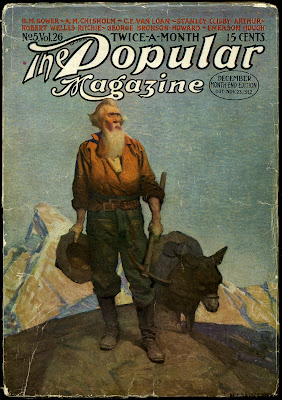
The Popular and the Good and the Doomed

Image
As I was writing a comment over at Adam Roberts's blog (about which more in a moment), I realized I had various items of the last few days swirling through my head, and it all needed a bit of an outlet that wasn't a muddled comment on Adam's blog, but rather a potentially-even-more-muddled post here. I don't have a whole lot to say about these things, and I certainly have no coherent argument to make, but they've congealed together in my mind, so here they are, with a few lines of annotation from me. Most of these things have gotten a lot of notice, but they haven't gotten a lot of notice together .

Defending Alice Munro

I was pleased to read Kyle Minor's response to Christian Lorentzen's London Review of Books   hatchet job on Alice Munro, not because I think Munro is above criticism, but because Lorentzen's attempt at a take-down was pretty shallow. I read Lorentzen's piece and was merely moved to get snarky on Twitter , but Minor really digs into Lorentzen's claims. Much as I am in awe of Munro's best stories, I am also extremely wary of any discourse that builds up around a writer to make them seem impervious to criticism. This is perhaps Lorentzen's best claim — that Munro has been too much worshipped and too little evaluated. It does our understanding of her achievement no service to surround every sentence she writes with awe. Habitual praise is meaningless. The critical writing about Munro that I most appreciate is the type that really digs into what she's doing and its effects. I found Lorentzen's approach annoying not because he doesn't like Munro...

Some Writing About What We Wrote About When We Wrote About The Caine Prize

Image
Though I decided at the last minute not to join the third annual Caine Prize Blogathon after having  participated in the first two, I am still interested in the Prize, its effect(s), and its complex relationship to the idea of "African literature". Thus, I read with great interest an article about recent reactions to the Caine Prize that has been published in the latest issue of the venerable journal Research in African Literatures . The article, "The Caine Prize and Contemporary African Writing" by Lizzy Attree , includes a discussion of the first year of the Caine Prize blogathon, a discussion which at first was very exciting for me, because it's nice to have an endeavor you've participated in noticed. Once I actually read all of what Attree had written, though, I became annoyed. The trouble is, I don't really recognize  the actual discussion  in the discussion that Attree says we had. Or, rather, I recognize parts of it, but because Attree foc...

Nonfiction and Science Fiction

Image
There's a fun Mind Meld feature at SF Signal on "Non-Fiction Books About Science Fiction That Should Be In Every Fan’s Library" , with responses from an eclectic group of writers, scholars, reviewers, etc. Well worth a glance. My own prejudices and inclinations align enough with many of the respondents that their lists include a lot of books I've spent a lot of time with, as well as others I'm unfamiliar with, which is always fun. One of the good things the Mind Meld editors do a lot is create agonizingly broad questions that can elicit hugely varied responses depending on how people interpret them; that's part of the fun of the feature. In this case, Gary Wolfe nails it: "I think this question depends on what you mean by 'fan.' Not all fans set out to be students of SF; some just want to enjoy the stuff and have no more interest in finding out about it than in finding out where their sausage comes from. Still fewer aspire to be scholars of th...

Re: Your Stephen King Problem

Image
Dear Dwight Allen: Thank you for letting me know about your Stephen King problem (henceforth, SKP). Many people let these problems go, thinking they're not particularly important or, ultimately, relevant to anyone other than themselves, but  the science shows that letting these problems linger encourages them to fester, and once they fester they can then lead to all sorts of complications and an endless array of other problems (most commonly, J.K. Rowling problems and J.R.R. Tolkien problems, which themselves can lead to entire textbooks of other problems.) Such suffering becomes an infinite sprawl of frustration, guilt, pain, and, often, anti-social behavior and anal warts. To assess your treatment needs, let's analyze some of your history and symptoms.

Pro-metheus

Image
Yesterday, I posted a mocking attack on Prometheus that also linked to other attacks. I hated the movie, and so did plenty of other people. But I don't want to give the impression that it is Friday the 13th Part XXVI: Jason vs. Maximus Prime . (Actually, that movie could be awesome! ) Plenty of perfectly intelligent moviegoers have not merely enjoyed Prometheus , but embraced it. Adored it. Gone to see it more than once. So, for some balance, here are four quotes from reviews and comments on the film that view it more positively than I or the people I quoted yesterday: Roger Ebert: Ridley Scott's "Prometheus" is a magnificent science-fiction film, all the more intriguing because it raises questions about the origin of human life and doesn't have the answers. It's in the classic tradition of golden age sci-fi, echoing Scott's "Alien" (1979), but creating a world of its own. I'm a pushover for material like this; it's a seamless...

Formalist?

Image
David Smith, untitled I have to admit that while plenty of Damien Walter's "Weird Things" columns at The Guardian are interesting, and it's really wonderful to see a major newspaper paying regular attention such stuff, and Walter seems like a passionate and thoughtful person ... the latest one, titled, "Should science fiction and fantasy do more than entertain?" pretty much made me gag. Mostly it was that headline that caused the coughing and sputtering; the piece itself isn't terrible, is well intentioned, and seems primarily aimed at a general audience. I'm not a general audience for the topic, so in my ways, I'm a terrible reader for what Walter wrote. Thus, I'll refrain from comment on the main text. But there's a statement he made in response to a commenter that didn't make me cough and sputter, it just made me question something I hadn't really questioned before: the term "formalist" and its relationship t...

Metaphor Systems, Fictive Moments, and False Arrests

Bradford Morrow , editor of Conjunctions  and writer of The Diviner's Tale  and The Uninnocent , in an interview conducted by Edie Meidav at The Millions : I may be overly optimistic or utterly blind, but my view of contemporary American fiction is that it is as rich as ever. Some of the best work is being written in what until recently was considered, at least among the conventional literati, genre fiction. Horror, gothic, mystery, fantasy, fabulism. There are so many stunningly original and serious writers working these fields. I have to think that anybody reading this interview would agree. Just one example, though there are many, would be Elizabeth Hand . She composes sentences of ravishing beauty. She is capable of creating metaphor systems that are so dynamic and provocative. She can turn a fictive moment that seems deeply rooted in the everyday into something that, in fact, touches upon the sublime, the miraculous. Just read her novella Cleopatra Brimstone and tell m...

How to Respond to a Critic

Image
Posting will be light-to-nonexistent here until after the new year, but I want to put this up before I forget it. I've been bingeing on Tim Minchin over the holidays, mostly because I've been very busy with grading, writing, wrapping, cleaning, etc. and needed something amusing and profane in the background of these activities. Minchin's "Song for Phil Daoust" is a heartfelt, soul-searching, and genuinely touching example of something artists should really never, ever do, despite the temptation: respond to a negative review. (Note: despite being heartfelt, soul-searching, and genuinely touching, this is not a song you will want to play anywhere where colorful words might singe sensitive sensibilities.)

Kael Days

Image
Seventeen years after her last book and ten years after her death, Pauline Kael's name is hard to avoid right now if you read culture magazines or blogs. That's because of three books that came out in October:  The Age of Movies: Selected Writings of Pauline Kael , edited by Sanford Schwartz and published by The Library of America; Brian Kellow's biography  Pauline Kael: A Life in the Dark ; and James Wolcott's memoir  Lucking Out: My Life Getting Down and Semi-Dirty in Seventies New York , which includes, apparently, lots of material about his friendship with Kael (before they had a falling-out after he published a sharply critical, even vicious, essay on Kael's acolytes in Vanity Fair  in 1997). I haven't read Wolcott's memoir, but I've been reading around in Kellow's biography and I'm familiar with almost everything in The Age of Movies.  It was Kael's 1,291-page retrospective collection For Keeps  from 1994 that made me into a fan of...

Die, American Literature! Die! Die!

Last month I wrote about Joseph Epstein's hilariously grumbly screed against The Cambridge History of the American Novel , and now at Slate the editor of that volume writes a temperate, rational, and utterly ungrumbly response . I particularly liked this paragraph: Simply recording our appreciation for the "high truth quotient" (the measure Epstein wants) of a stream of canonical novels won't do. It's not clear what that "quotient" is for Epstein, but anything that smacks of pop culture is by definition excluded. Yet novels were and remain a vital part of popular culture, and their emergence in the 18th and 19th centuries was greeted as an affront to the "centurions of high culture" who appointed themselves to guard the gates before Epstein nominated himself for the job. Only a tiny fraction of the hundreds of thousands of American novels published ever achieved—or even aspired to—the exalted status of high art.

The Reign of Good Queen Anne Was Culture's Palmiest Day

I hadn't read an ill-tempered screed against all things contemporary and academic for at least a couple of days, so it was with delight that I happened upon Joseph Epstein's Wall Street Journal review of The Cambridge History of the American Novel . What a hoot! Some sadistic editor at the WSJ assigned Epstein to read and review a book that was never intended for people to just sit down to read. It's a reference book, something for library shelves, a book to be cited, and, for its contributors, a credit for touting. That's not to say it's not useful -- were you doing some research on a particular phase of American lit, it might give good guidance, and I would find it especially useful with undergraduates to show them the wide range of topics that can be thought about, analyzed, studied. Like a 1,200 page collection of academic essays about American history. Useful for various purposes, but not really something to take to the beach or the bed. Properly categori...

"The Priests of Alternative Minds"

From an interview conducted in 1977 by UCLA Ph.D. students with Raymond Durgnat , published in 2006 by Rouge : DURGNAT: Brigid Brophy said that fundamentally a novel is a take-over bid for one’s ego, and that’s probably true for any work of art. Having an artist’s mind take over one’s own mind in a way that enriches it instead of obliterating it. So temporarily, for an hour and a half, I can become more like Dreyer or more like Minnelli or more like anybody than I could be any other way. The mere effort of adaptation seems to me to be a valuable spiritual exercise; even coming to understand a Fascist mind, for example, via Leni Riefenstahl. In a sense, artists are the priests of alternative minds, that is, of communication. Some artists are so rich one endlessly finds more in them. Or one finds them congenial, like old friends. Others one respects rather than likes. There are works of art which one knows are pretty simple-minded, but a sort of temporary regression is probably good fo...

Chaos Cinema

Image
Scarface, 1932 There's an interesting two-part video essay by Matthias Stork posted at Press Play about what Stork calls "chaos cinema" -- action movies (mostly from the last 15 years or so) that violate classical principles of staging, framing, and cutting. I am in sympathy with Stork's overall point, and one of my few absolutely fuddy-duddy tendencies is a belief that classical action composition and editing is usually superior to the chaos cinema style Stork identifies -- I often want to yell at directors like Christopher Nolan  (who is five years older than me), "You kids will never understand why Howard Hawks is great!" But I have some reservations about Stork's analysis. Basically, they are two: 1.) He interprets an aesthetic technique as a single type of moral expression; 2.) he assumes all audiences watch the way he does.

Avatar: A Contradictory Text

Image
from "Race and Revenge Fantasies in Avatar, District 9, and Inglourious Basterds " by John Rieder , Science Fiction Film & Television  vol. 4, issue 1, January 2011: The stupendous commercial success of Avatar  may have been achieved in spite of its ideologically retrograde character, as many of its early reviewers seemed to think, but it seems more likely that its revivification of old-fashioned, reassuring exoticism is one of the principal reason for its popularity. In a contemporary economy whose financial, political, and commercial core continues to rely heavily on resource extraction from peripheral sites, Avatar  offers a painless adjustment of colonial-era fantasies of appropriation to contemporary ecological and political conditions. Its vision is essentially akin to the widespread contemporary ideology -- arguably the dominant coprorate and political vision of the present-day US -- of a "green capitalism" that keeps the flows of resources and syste...