Posts

Showing posts with the label interviews

A Conversation with Robin McLean

Image
  Robin McLean is one of the coolest people I know. Not only a smart, sharp writer, she has also, as her official bio says, "worked as a lawyer and then a potter in the woods of Alaska before turning to writing". She has lived in all sorts of places, done all sorts of things. And somehow she managed to get no less than J.M. Coetzee — J.M. COETZEE — to blurb her first novel. Not just blurb it, not just say "Robin McLean is a writer to watch" or something like that, but to say, "Not since Faulkner have I read American prose so bristling with life and particularity." (If I were Robin, I would have a hard time not wandering around town saying, "Hi. J.M. Coetzee compared me to Faulkner.") Coetzee isn't the only one who has noticed her. Of Pity the Beast , Karen Russell said, "Robin McLean writes scenes that feel as vibrant, terrifying, and wondrous as your most adrenalized memories. Her country is never merely the backdrop for human dram...

A Conversation with Craig Laurance Gidney

Image
  Craig Laurance Gidney is a longtime friend of mine, a past contributor of book reviews here at The Mumpsimus, and a participant in our Delany roundtable in 2014 . I also had the pleasure to work as one of the editors for his story "Black Winged Roses" at The Revelator . It has been a joy to watch his career develop from his first short story collection, Sea, Swallow Me (Lethe Press, 2008) through to the success of his novel A Spectral Hue (Word Horde, 2019) and now his new story collection, The Nectar of Nightmares (Underland Press, 2022). About his work, Elizabeth Hand has said, "Sublime in the purest sense of the word, Craig Gidney's gorgeous stories evoke beauty, terror, and wonder, often — usually — on the same page. He uses words the way a master artist employs paint, creating lush, hallucinatory worlds as beautiful as they are treacherous." Craig's previous collections have all been nominated for the Lambda Literary Award, as was A Spectral Hue...

Conversation on a Story: "A Suicide Gun"

Image
A few days ago, I put a previously-unpublished story up on my website, "A Suicide Gun" , and gave a little bit of background here . Somewhat to my surprise, a number of people read the story immediately and then asked questions. (I'm not being disingenuous about the surprise — it's not just a somewhat off-putting story, but it's also pretty long. I certainly hoped some people would read it, but I didn't expect anybody to get to it quickly.) The questions led me to think again about the story and what it's doing, and they also got me thinking more generally about how and why we read stories, and about the aesthetics of short fiction. Thinking that some of those ideas might be helpful, interesting, provocative, or at least of passing interest to a few people, I decided to write up some of the questions and my responses in a kind of interview. Note, given the subject matter here:  If you are in crisis, call the toll-free National Suicide Prevention Lifeline a...

A Conversation with Nathan Alling Long

Image
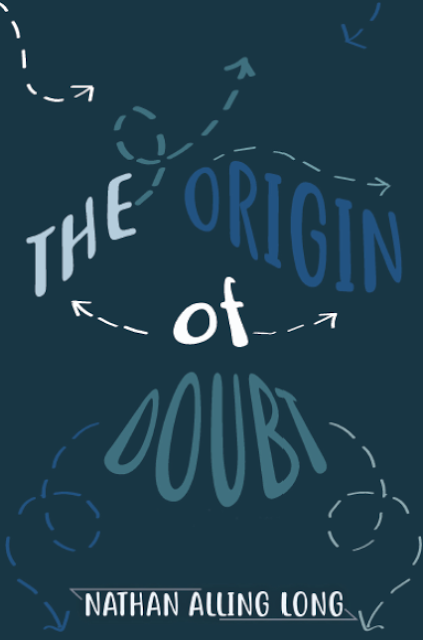
Nathan Alling Long is the author of the flash-fiction collection The Origin of Doubt , recently published by Press 53 . Timothy Liu said of the collection, "He blurs the lines between flash fictions and prose poems. All of a sudden, genre distinctions start to give way, and what we thought we thought we knew is altered, transformed. These stories span the gamut from traditional to queer trans-genre forms, marvelous to behold in times like these when political discourses and abuses of language have sunk to unforeseen lows." Nathan's writings have appeared in a wide range of publications and venues, including  Glimmer Train,   Tin House , The Sun ,  Story Quarterly, Strange Tales V , and NPR. He has taught at various schools; currently, he teaches creative writing, literature, and Women, Gender, and Sexuality Studies at Stockton University. Though he has lived all around the country, and traveled all over the world, he now lives in Philadelphia. I met Nathan in...

The Pleasure of the (Queer) Text

Image
I returned to the WROTE Podcast recently for a 2-part discussion of reading and writing queerly with Dena Hankins, SA "Baz" Collins, and moderator Vance Bastian. (Previously, I did a solo conversation there.) The strength of the discussion is also what makes it sometimes awkward and even contentious: we all have utterly different tastes, touchstones, and experiences. I'm not a natural fit for such a conversation, as I don't think of myself as a "consumer of queer content", but rather as a reader/writer who sometimes reads/writes queer stuff. I hardly ever seek out a book only because it's about a queer topic or has queer characters, and I only ever set out to write such a thing if I'm writing for a specifically queer market, which rarely happens. As I say in the program, if a book's not trying to do something new and different, and if it's not aesthetically interesting to me, I'm unlikely to read it. Why bother? I've got m...

Conversation at Electric Literature

Image
The good folks at Electric Literature invited me to converse with Adrian Van Young, perhaps not knowing that Adrian and I had recently discovered we are in many ways lost brothers, and so we could go on and on and on... And we did. We talked about  Texas Chainsaw Massacre , The Sublime, writing advice, writers we like, Michael Haneke, neoliberalism,  The Witch , and all sorts of other things. It was a lot of fun and we could have gone on at twice the length, but eventually we had to return to our lives. Many thanks to Electric Lit  for being so welcoming.

An Interview with One Story

Image
A new interview with me — the first to come out since Blood: Stories was released — is now up at One Story 's blog, part of the publicity leading up to the One Story Literary Debutante Ball . Many thanks to Melissa Bean for conducting the interview, and for her very kind words about the book. Here's a taste: MB: On that note, what inspires your stories? MC: Daydreams and nightmares created by anxieties, fears, and desires. I don’t write fiction for the sake of therapy, per se, but I am prone to anxiety and I have an active imagination, so it’s often the case that a story starts from one of my weird anxiety fantasies. Read more at One Story...

Guy Davenport on Writing and Reading

Image
Guy Davenport, illustration from Apples & Pears I've just begun reading Andre Furlani's Guy Davenport: Postmodern and After , a magnificent book (so far), and went to track down one of the items cited there, a 2002 interview by B. Renner for the website Elimae . Alas, the site seems to have died, but god bless the Wayback Machine: here it is, cached. The interview is not as meaty as some others, for instance Davenport's Paris Review interview , but it's always interesting, and I was particularly struck by this: DAVENPORT: At Duke I took Prof Blackburn's Creative Writing course (Bill Styron and Mac Hyman were in the class) and got the wrong impression that writing is an effusion of genius and talent.  Also, that writing fiction is Expression of significant and deep inner emotion.  It took me years to shake off all this.  Writing is making a construct, and what's in the story is what's important.  And style: in what words and phrases the story is...

Delany & The Bat

Ed Champion interviews Samuel Delany for his Bat Segundo Show. An informed, wide-ranging conversation that's very much worth the time to listen to: Delany: And I think pornotopia is the place, as I’ve written about, where the major qualities — the major aspect of pornotopia, it’s a place where any relation, if you put enough pressure on it, can suddenly become sexual. You walk into the reception area of the office and you look at the secretary and the secretary looks at you and the next minute you’re screwing on the desk. That’s pornotopia. Which, every once in a while, actually happens. But it doesn’t happen at the density. Correspondent: Frequency. Delany: At the frequency that it happens in pornotopia. In pornotopia, it happens nonstop. And yet some people are able to write about that sort of thing relatively realistically. And some people aren’t. Something like Fifty Shades of Grey is not a very realistic account. Correspondent: I’m sure you’ve read ...

A (Second) Conversation with Maria Dahvana Headley

Image
Today marks the official release date of Maria Dahvana Headley's first novel, Queen of Kings , and to celebrate the occasion, I present to you below a conversation Maria and I had via instant message yesterday. This is a Mumpsimus first: a second interview with someone. Though I've done a bit of interviewing here over the years, I have never, until now, returned to an interview subject. Talking with Maria is always a great joy, and there isn't a person I'd rather do my first second interview with. The first interview, back in 2005, with Maria is here . But now the first in what perhaps will become a series here: the (Second) Conversation With... series. We shall see... Queen of Kings is a historical fantasy set in 30 B.C., and it stars Cleopatra . But not exactly Cleopatra as we have understood her in most of the history books -- for though this Cleopatra conforms to the known history, certain elements of that history are explained via supernatural phenomena. I...

In Which I Interview Carol Emshwiller

Image
Eric Rosenfield has very kindly posted the video from my interview with Carol Emshwiller on April 18. Thanks to Susan Emshwiller for jumping in as camera operator. The interview was preceded by a magic show , which explains my first, awkward question. I'll embed the video below the jump. The Carol Emshwiller Project , by the way, is still alive. Now that I've got a copy of The Collected Stories, vol. 1 , I hope to post at least a little something about it over there, but I'm not going to have time to do so for a week or two, I expect.

Secret History Revealed!

Rain Taxi has posted online an interview I conducted with James Patrick Kelly and John Kessel , editors of The Secret History of Science Fiction . Most of the discussion took place in a Masonic lodge in southern New Hampshire, although at one point I was blindfolded and taken to an undisclosed location that smelled of patchouli and motor oil.  Jim Kelly ducked out briefly to launder some money vacation in the Cayman Islands, and John Kessel made me repeat long passages of Latin that made my skin itch.  But I let nothing stop my relentless pursuit of the truth...

Likely Stories

From a wonderful new interview with Brian Evenson by John Madera at Rain Taxi: Brian Evenson: Some of the stories I always come back to, when I’m teaching full stories and trying to get students to understand how all the different elements of a story are working together, include William Trevor’s “Miss Smith,” which I think does amazing things with shifting the reader’s sympathy; Franz Kafka’s “A Country Doctor,” which does something amazingly manic with doubling and which may be my favorite story ever; Isak Dinesen’s “The Roads Round Pisa” or “The Monkey,” both of which do things that I don’t think I’ve ever seen anyone else do; Peter Straub’s “Bunny Is Good Bread” and “Lapland,” which do very important things in terms of questioning the relation of genre to literature; Denis Johnson’s “Car Crash While Hitchhiking,” which manages to collapse as a story while still establishing an incredible resonance; D. H. Lawrence’s “The Prussian Officer,” because it works even though it does all s...