Posts

Showing posts with the label Publishing

Drifting

Image
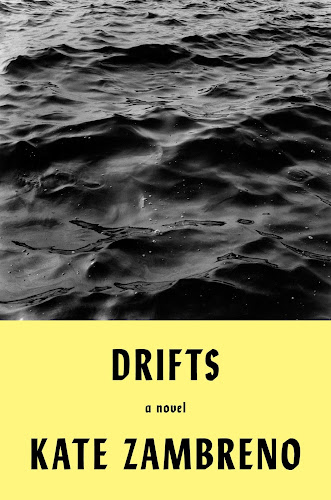
* Kate Zambreno's new book, Drifts: A Novel , was written before the novel coronavirus upended the world and forced us all into more limited lives. But it is a book that feels of this time. Not of this time in subject matter, though its questions about how we make meaning and art and life are certainly heightened now. Rather, the book feels of this time in its structure, in its commitment to shards and fragments.  (Now, as a Nobel laureate once said, everything is broken .) Zambreno has made something of a career of fragmentation. A glance at her books might suggest monotonous similarity, all those unindented paragraphs separated by blank space. There are similarities, too, across the characters and voices. But each book is quite distinct. Each has a different focus, and they often have a different emotional core, a different sense of the problems or questions that inspired them. Like Jean Rhys, a writer clearly important to her, Zambreno writes books that often feel diaristic, mem...
On Academic Book Prices, and Other Subjects...

Image
Over at my other blog, Finite Eyes (about academic subjects, and things related to my job as Interim Director of Interdisciplinary Studies at Plymouth State), I've got a few new posts, including one on the pricing of academic books , which might be of at least vague interest to Mumpsimus readers. There's also a post thinking about John Warner's excellent book Why They Can't Write . And a post that's gotten tons of traffic after being Tweeted out by a few prominent academics' accounts: "Cruelty-Free Syllabi" .

Anecdotes on Literary Popularity and Difficulty

Image
When interviewed by a reporter from the Wall Street Journal regarding Thomas Ligotti , Jeff VanderMeer was asked: "Can Ligotti’s work find a broader audience, such as with people who tend to read more pop horror such as Stephen King?" His response was, it seems to me, accurate: Ligotti tells a damn fine tale and a creepy one at that. You can find traditional chills to enjoy in his work or you can find more esoteric delights. I think his mastery of a sense of unease in the modern world, a sense of things not being quite what they’re portrayed to be, isn’t just relevant to our times but also very relatable. But he’s one of those writers who finds a broader audience because he changes your brain when you read him—like Roberto Bolano. I’d put him in that camp too—the Bolano of 2666 . That’s a rare feat these days. This reminded me of a few moments from past conversations I've had about the difficulty of modernist texts and their ability to find audiences. I have often...

Commonwealth of Letters: British Literary Culture and the Emergence of Postcolonial Aesthetics by Peter J. Kalliney

Image
It is unfortunate that, so far as I can tell, Oxford University Press has not yet released an affordable edition of Peter J. Kalliney's Commonwealth of Letters , a fascinating book that is filled with ideas and information and yet also written in an engaging, not especially academic, style. It could find a relatively large audience for a book of its type and subject matter, and yet its publisher has limited it to a very specific market. [Update 22 Nov 2015: Commonwealth of Letters is now, and newly, available in paperback ! It's still somewhat expensive, but not by academic book prices, which means that those of us who really really need our own copy can perhaps afford it. I picked it up at the Modernist Studies Association conference this weekend (conference discounts are a nice perk), and told so many people about it that I think it sold out. Which might not have been my fault. Or maybe it was...] I start with this complaint not only because I would like to be able to...

The Hudson Prize and Blood: Stories

Image
  The first book written for adults that I ever coveted and loved and read to pieces was a short story collection: Stephen King's Night Shift , from which my cousin read me stories when we were both probably much too young, and which was one of the first books I ever bought myself. Ever since then, short story collections have seemed to me the most wonderful of all books. I started publishing short stories professionally with "Getting a Date for Amelia" back in 2001. I barely remember the kid who wrote it (in the summer of 2000). I'm not a prolific fiction writer; I've been lucky enough to publish most of the stories I've written in the last decade or so, but I average only two stories a year. Fiction is the hardest thing in the world for me to write. Some stories have taken many years to find a final form. The kid who wrote "Getting a Date for Amelia" also managed to write a novel; it was mostly terrible (or, rather, not terrible , which might...

Poetical Needy-brains, empoisoned pens, obscene invective...

Image
via Rutgers University Community Repository Two passages from Milton: Poet, Pamphleteer, and Patriot by Anna Beer , concerning the early 1640s: As with the Internet in this century, people expressed real fears about the sheer number of new works appearing. Others condemned the whole notion of publication, particularly for money. Publication was imagined as "epidemical contagion", and "Pamphlet-mongers" were castigated for writing for "a little mercenary gain, and profit" , as "poetical Needy-brains, who for a sordid gain or desire to have the style of a witty railer, will thus empoison your pen". The proliferation of new pamphlets was also resented by more (allegedly) serious writers, who complained that "such a book as that of thirty or forty sheets of paper is not likely to sell in this age were the matter never so good, but if it had been a lying and scandalous pamphlet of a sheet of paper ... to hold up Anarchy" then the pri...

VIDA at AWP

Image
One of the most interesting discussions I saw at the AWP conference was one sponsored by VIDA , with editors and writers talking about the results of VIDA's 2013 count of female and male writers in various publications. This year, they were able to offer a particularly revealing set of graphs showing three year trends in book reviewing at major magazines and journals. The only report of the discussion I've seen so far is that of VIDA volunteer Erin Hoover at The Nervous Breakdown  (although I'm sure it was covered by Twitter when it happened). Hoover gives a good overview of the panel and the issues. I took lots of notes, so will here add some more detail to try to show how the discussion went. After introductory remarks by moderator Jennine CapĂ³ Crucet, the first responses were made alphabetically by last name, and so two men began: Don Bogen , poetry editor of The Cincinnati Review , and Stephen Corey , editor of The Georgia Review . Bogen noted that, ins...

The Worst Years of the Book as an Object

A fascinating interview at Boston Review with the always-already-fascinating Richard Nash: ...I’m tremendously optimistic about the future of the book as an object. I think the worst years of the book as an object have been the last 50 years. [...] Basically, when you’ve got an industry that is pushing out $25 billion worth of physical products into a supply chain, the vast majority of businesses are going to try to cut costs and increase revenues. And the simplest way to cut costs is going to be on the production side. So if the core of the business is no longer a supply chain, but rather the orchestration of writing and reading communities, the book is freed of its obligation to be the sole means for the broad mass dissemination of the word, and instead become a thing where the intrinsic qualities of the book itself can be explored. And much more about publishing, reading, Cursor , communities, etc.

A Contribution to Schaller-VanderMeer Studies

After my own previous contribution to the burgeoning academic field of VanderMeer Studies, I am happy to christen yet another field: Schaller-VanderMeer Studies, a discipline inaugurated in ivy-covered halls with the Illustrating VanderMeer exhibit. True (Schaller-)VanderMeer Studies scholars do not limit themselves to the study of half a VanderMeer, however, and so I am happy to present here a monograph by Eric Schaller about the woman who was described by Xaver Daffed as "the better half of VanderMeer" (325). This monograph was originally published in the  Fogcon program book, March 2011. ANN VANDERMEER by Eric Schaller Something was happening back there at the tail end of the last millennium. And I’m not talking about The Gulf War, McDonald’s opening a franchise in Moscow, the cloning of Dolly the sheep, the Spice Girls, or even Bill Clinton demonstrating new uses for a cigar. Although all these probably figure in there somewhere. What I am talking about a...

An Autobiography in Books

Image
Ray Russell of Tartarus Press has just put a lovely short film up on YouTube, a sort of autobiography via his book collection. Anyone who has ever felt the passions of bibliomania will find the film irresistible, and the shots of some of the rare books, especially by Arthur Machen and Sylvia Townsend Warner, are sensuous and gloriously bibliopornographic.

Just Be Glad You're Not Trying to Sell a Poetry Book

I was working on a post about the BlazeVOX asking-writers-to-help-subsidize-poetry-publishing brouhaha , and its connections to the criminal idiocies of so much academic publishing, and what the idea of "legitimacy" in publishing does for us as writers and readers, but the post got long and banal and so boring that I started falling asleep while I wrote it, which is a bad sign, so I abandoned it, but I've still been keeping one eye on the discussion. Today's post of note is from the blog of No Tell Books , a small, respected indie press: No Tell Books' best selling title broke even after three years and is now earning a very modest profit. This is by an author whose work has appeared in places like Poetry and Best American Poetry . This title has been taught at universities. How many copies does one have to sell to be the best selling title at No Tell Books after four years? 228 . That is not a typo. This number doesn't include what the author has sold h...

Changes at Weird Tales

Image
I was distraught to learn that Ann VanderMeer will no longer be the editor of Weird Tales . During Ann's tenure, first as fiction editor and then as editor-in-chief, the magazine has been more exciting, alive, and contemporary than it had been in at least 60 years, publishing all sorts of different types of fiction from writers young and old, new and famous; writers known within particular popular genres and writers known better among the literati. The magazine has been a joy to read. More than a joy, really, because it became an exciting magazine of surprises, and we need all those that we can get. Ann's a great editor and will go on to many marvelous things in the future, as will the rest of the extremely talented staff. They worked wonders with limited resources, and I have no doubt the future holds great things for them all. Today, though, is a sad one. Thank you to everybody at Weird Tales  over the last five years. You've got a lot to be proud...

Help Writers Decorate Their Hovels! Buy E-Books!

Image
The only e-book device I have other than my laptop is an iPod Touch, and neither the laptop nor the iPod is anything I want to read an entire book on (reading on the iPod is only slightly more comfortable than reading the The Compact OED  through a magnifying glass), but I very much like the idea  of e-books, even if I don't read them, and one of these days perhaps I'll break down and get one of them there gadgets that's designed for the durn things. Anyway, as a public service announcement, here are some recent e-book announcements that piqued my interest: Minister Faust's new novel, The Alchemists of Kush , is now available for $2.99, and it broke the Amazon Top 1,000 on its first day, which moves it closer to reaching the goal of breaking the Top 100, at which time Minister Faust will donate $500 to send textbooks to university students in South Sudan . For more info, check out  this interview of Mr. Faust by Jeff VanderMeer . Speaking of Jeff VanderMeer, he...

Wizard's Tower Press and Salon Futura

One of my favorite people in the science fiction community, Cheryl Morgan , is one of the people launching a new publishing company, Wizard's Tower Press .  From their own description of their primary publishing purpose: We concentrate mainly on making out-of-print works available once more as e-books, and helping other small presses exploit the e-book market. We will also publish a small number of limited-print-run anthologies with a view to encouraging diversity in the science fiction and fantasy field.  In addition to that, though, Wizard's Tower will be launching a nonfiction webzine, Salon Futura , which Cheryl will edit.  This is great news, because in my own experience working with her, Cheryl has been a thoughtful, intelligent, and persistent editor, which is an ideal combination of qualities for an editor to possess. Salon Futura needs submissions.  Read their guidelines and submit!   They pay money, and you need that, I know you do!

Happy Birthday, Tor!

Image
Yesterday -- Friday, April 23, 2010 -- Tor Books turned 30.  Irene Gallo celebrated at Tor.com with a marvelous photo gallery of the Tor folks . On my last visit to New York, Tor editor Liz Gorinsky gave me a tour, which was great fun -- not only because I got to say hi to lots of great people, some of whom I'd only ever met via email or press release, but also because Tor is housed in the Flatiron Building , and the view from some of the offices (and especially the conference room/library) is fabulous. Tor has published plenty of books by people who've become friends of mine over the years, and the only two professional fiction writers I knew when I was young, Jim Kelly and L.E. Modesitt , were both published by Tor when I first met them. It seems appropriate, then, that on Monday I'll be discussing a Tor novel with one of my classes -- Brian Slattery's Liberation  (in a class that also used another Tor book, The Dark Descent edited by David Hartwell), and so...

Salinger of New Hampshire

Image
We've had to say goodbye to one of our residents , Mr. Salinger.  He wasn't a native, but lots of folks up here aren't, and we try to treat them all the same.  (We don't give them a special sales tax just for them, we don't tell them they can't have guns.)  Mr. Salinger lived pretty close to the border of the People's Republic of Vermont, but he was still one of us, not a dirty commie .  They say he had some peculiar habits, but that was none of our business. I've been through Cornish, where he lived, but never sought him out.  Folks from the big cities called him a recluse, but I'm not sure that's true.  He didn't go around on book tours, he didn't give lectures, he didn't seek out his fellow scribblers, so therefore he must be crazy, they thought.  Plenty of people said they'd seen him in town.  He and I enjoyed the same library , so we might have roamed the stacks together for all I know.  Not wanting to be pestered, he did...