Posts

Showing posts with the label future

Against the Human

Image
  "Mankind was born on Earth. It was never meant to die here."  —Cooper, Interstellar "This is what I mean when I'm talkin' about time, and death, and futility."  —Det. Rust Cohle, True Detective Season 1 "Making kin and making kind ... stretch the imagination and can change the story."  —Donna Haraway, Staying with the Trouble   In his brief book The Revolt Against Humanity: Imagining a Future Without Us , Adam Kirsch proposes that radical pessimism and fervent transhumanism are opposite poles of an anti-human spectrum: "The antihumanist future and the transhumanist future are opposites in most ways, except the most fundamental: they are worlds from which we have disappeared, and rightfully so." Reading the book is like watching Matthew McConaughey's character of Detective Rust Cohle from True Detective speak for a while and then give over the stage to McConaughey's character from Interstellar , Cooper. While the character of C...
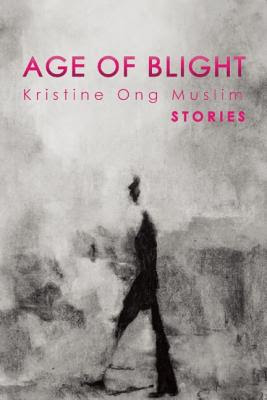
Elements of Style for the Age of Blight

Image
Introductory As the world burns away in political crises and ecological catastrophe, writers strain against meaninglessness, against the sense that their work is nothing more than a few grains of confectionary sugar tossed to a howling wind. What forms might fit our time, what stories might we tell against a future of no-one left to listen to stories? No other label for where we are and where we’re going as a world seems quite so accurate as the one Kristine Ong Muslim has used for her recent collection of stories, The Age of Blight . It is a book of glimpses, shards, and lost myths; it works like a nightmare recollected during the day before you know the nightmare will return and sleep cannot be kept at bay indefinitely. The Age of Blight and a thousand books like it will not forestall our own Age of Blight, but Muslim offers strategies for storytelling as the blasted era blightens. Her techniques for writing fiction are ones that make demands on the reader, but they...

Aurora by Kim Stanley Robinson

Image
To make Kim Stanley Robinson's Aurora make sense, I had to imagine a metafictional frame for it. The novel tells the story of a generation starship sent in the year 2545 from the Solar System to Tau Ceti. It begins toward the end of the journey, as the ship approaches its destination and eventually sends a landing party to a planet they name Aurora. The narrator, we quickly learn, is the ship's artificial intelligence system, which for various reasons is learning to tell stories, a process that, among other things, helps it sort through and make sense of details. This conceit furthers Robinson's interest in exposition, an interest apparent at least since the Mars trilogy and explicit in 2312 . As a writer, he seems most at home narrating scientific processes and describing the features of landscapes, which does not always lead to the most dynamic prose or storytelling, and he seems to have realized this and adjusted to make his writerly strengths into, if not his bo...

On Trouble and Her Friends

Strange Horizons has posted my review of Melissa Scott's Trouble and Her Friends , recently re-issued by Tor. I went in expecting to love the book, or at least enjoy it, because my admiration for the novel Scott published after Trouble , Shadow Man , is boundless. (I've called it "one of the great science fiction novels of the past 25 years," and I do believe that.) Unfortunately, and much to my sadness, I didn't think Trouble and Her Friends  has survived the years quite as well.

Origin Story

Ed left Sears, Roebuck in August 1908, and the card he sent to Emma from South Bend, Indiana, shortly afterward indicates that he was preparing for some new enterprise or engaged in making contacts or purchases for his partnership with Dentzer. Dated September 15, 1908, the card was addressed to Emma at 197 Park Avenue. It reads: "This isn't a half bad little town. Haven't accomplished much yet. Not even my lunch -- 12:15 p.m." On the same date he sent little Joan a card containing one word: "Google." -- Edgar Rice Burroughs: The Man Who Invented Tarzan by Irwin Porges, Brigham Young University Press, 1975, page 104