Posts

Showing posts with the label race

Ferguson. Power.

Image
Ferguson, Missouri. Nov. 24, 2014. (Photo by Adrees Latif/Reuters) from "Power" by Audre Lorde: I am trapped on a desert of raw gunshot wounds and a dead child dragging his shattered black face off the edge of my sleep blood from his punctured cheeks and shoulders is the only liquid for miles and my stomach churns at the imagined taste while my mouth splits into dry lips without loyalty or reason thirsting for the wetness of his blood as it sinks into the whiteness of the desert where I am lost without imagery or magic trying to make power out of hatred and destruction trying to heal my dying son with kisses only the sun will bleach his bones quicker. (photo by Joshua Roberts/Reuters)

Ferguson, Missouri, USA

Image
Let America be America again. Let it be the dream it used to be. Let it be the pioneer on the plain Seeking a home where he himself is free. (America never was America to me.)

Snowpiercer: Total Cinema

Image
  Press Play has now posted my new video essay with a brief accompanying text essay about the great new science fiction action movie political parable satire call to revolution Snowpiercer , directed by Bong Joon-Ho, a filmmaker I am especially enamored of. ( Memories of Murder is easily among my favorite movies of the last 15 years , and back in 2010 I defended Bong's previous film, Mother , from the criticisms of Richard Brody at the New Yorker .) As a little bit of extra, below the fold here I'll put some thoughts on elements of the remarkable ending of the film...

"America never was America to me"

Image
Let America be the dream the dreamers dreamed— Let it be that great strong land of love Where never kings connive nor tyrants scheme That any man be crushed by one above. (It never was America to me.) O, let my land be a land where Liberty Is crowned with no false patriotic wreath, But opportunity is real, and life is free, Equality is in the air we breathe. (There’s never been equality for me, Nor freedom in this “homeland of the free.”) I thought of my favorite Langston Hughes poem, "Let American Be America Again" while reading Ta-Nehisi Coates's extraordinary new essay at The Atlantic , "The Case for Reparations" (for which we should just give Coates the Pulitzer right now): If we conclude that the conditions in North Lawndale and black America are not inexplicable but are instead precisely what you’d expect of a community that for centuries has lived in America’s crosshairs, then what are we to make of the world’s oldest democracy? One cannot e...

On 12 Years a Slave

Image
Press Play has now posted an essay I wrote about 12 Years a Slave . It begins: 12 Years a Slave has arrived in theatres already barnacled with expectations. In its festival appearances, it met with critical acclaim, and Oscar odds-makers had already slated it for various awards. Viewers buy their tickets, sit down in their seats, wait for the lights to dim, and expect great things. But viewers also have other, deeper expectations. The dominant cinematic story of slavery has been the story of white redemption and white heroism against an unfortunate institution perpetuated only by the most sadistic of bad white men. Even today, it is exceedingly rare to find a story about slavery that doesn't emphasize how good-hearted white people can be and how inherently just, good, and equal America is. In American movies, black suffering redeems white characters and affirms white nobility.     12 Years a Slave tells a different story, but because the familiar narrative has con...

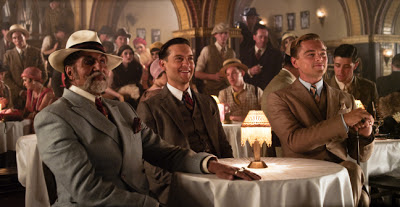
Race and Illicit Desire in The Great Gatsby

Image
I don't much care for the novel The Great Gatsby  (the lyricism of the writing gets tiresome, the characters are annoying, and somebody ought to take out that damned green light with a sniper rifle), but one passage has long fascinated me: “Civilization’s going to pieces,” broke out Tom violently. “I’ve gotten to be a terrible pessimist about things. Have you read The Rise of the Colored Empires  by this man Goddard?” “Why, no,” I answered, rather surprised by his tone. “Well, it’s a fine book, and everybody ought to read it. The idea is if we don’t look out the white race will be — will be utterly submerged. It’s all scientific stuff; it’s been proved.” “Tom’s getting very profound,” said Daisy, with an expression of unthoughtful sadness. “He reads deep books with long words in them. What was that word we—” “Well, these books are all scientific,” insisted Tom, glancing at her impatiently. “This fellow has worked out the whole thing. It’s up to us, who are the dom...

Mo-metheus

Image
I had no intention of ever writing anything ever again whatsoever about Prometheus , or even mentioning the movie ever again in my life, but I just read two great pieces about it, so can't resist sending attention to them. (One links to the other, in fact.) First, Elaine Costello's amazingly rich, provocative, nuanced, thoughtful, beautiful stream-of-theoryness wonderings about the film — about its economies and genders and races and religions, its unsaid saids and said unsaids. ("...which reminded me that the spaceship is a military-industrial [and so imperial-colonial] apparatus...") Here's just a tiny taste of an extraordinary tapestry: What I wonder about is this: if David really can be read as an anti-colonial and anti-corporate saboteur, why does this progressive message, this transgressive messenger, still have to wear the most Aryan body imaginable? I’m aware that casting an actor of color as the android character would have made the slippages th...

Trayvon Martin (1995-2012)

Image
A black boy was shot dead in Florida. His killer is known, but the police refused to arrest him. The police said they had no probable cause to arrest the killer, who claimed self-defense. The killer was a Neighborhood Watch volunteer. He saw a black boy walking in the rain. He called 911. The dispatcher told him not to follow the boy. But he did. He approached him. They wrestled. Witnesses called 911. Trayvon Martin was armed with a bag of Skittles and a bottle of iced tea. A black boy was shot dead in Florida. His killer walks free. More information: The Trayvon Martin Killing, Explained (by Adam Weinstein, Mother Jones ) What Everyone Should Know About Trayvon Martin (by Jud Legum, ThinkProgress) Coverage at The Atlantic . See in particular the posts by Ta-Nehisi Coates Re-Nigging on the Promises: #Justice4Trayvon (The Crunk Feminist Collective) UPDATE : U.S. Department of Justice, FBI and FDLE to probe Trayvon Martin killing Visit msnbc.com for ...

The White Savior Industrial Complex

Image
Teju Cole: The White Savior Industrial Complex is not about justice. It is about having a big emotional experience that validates privilege. See also Aaron Bady's excellent collection of reading material:  "On the genre of 'Raising Awareness about Someone Else’s Suffering'" .

Alternate History

Image
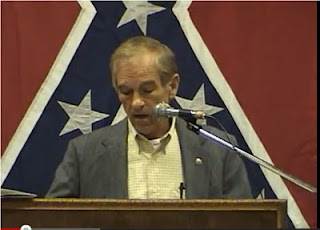
Ta-Nehisi Coates on Ron Paul's insistence that "compensated emancipation" would have prevented the Civil War: We are united in our hatred of war and our abhorrence of violence. But a hatred of war is not enough, and when employed to conjure away history, it is a cynical vanity which posits that one is, somehow, in possession of a prophetic insight and supernatural morality which evaded our forefathers. It is all fine to speak of how history "should have been." It takes something more to ask why it wasn't, and then to confront what it actually was.  For more, see his first post in this series .

Suffrage and Race

Over at Daily Kos, Denise Oliver Velez has posted a helpful overview of the complex history of civil rights struggles in the U.S. , particularly the 19th century. Just as the abolition movement spawned a struggle for women's suffrage, and the civil rights movement was the impetus for both second wave feminism and LGBT rights, the historical role of black women in the context of the suffrage movement is a key to understanding the founding of black women's clubs, sororities and political organizations. That history also explains the roots of the racial contradictions of second and third wave feminism and the development of black feminism. She goes on to discuss the rift between Frederick Douglass and some of the most prominent white women's suffrage activists after black men were enfranchised, as well as some of the later conflicts and complexities -- a history that had some eerie resonances during the 2008 election (for a good account of which, see Rebecca Traister's...

A Stranger Comes to Town...

Via Tempest Bradford I read the call for stories for a proposed anthology called Dark Tales of Lost Civilizations .  The title and description are utterly screaming out for submissions filled with casual, ignorant, and textually-inherited exoticization and racism. The "lost race / lost civilization / lost world" story derives from an imperialist history and view of the world, but at its most benign it's a version of the old "a stranger comes to town" story, with the stranger as the explorer and the town as the "lost" place. ("Lost" only to the stranger; to the inhabitants, it's been there all along and this "lost" talk is very odd, though maybe helpful if you're seeking to build a tourist industry.) On Twitter, Cheryl Morgan wonderfully suggested, "What you need is an anthology full of brown people discovering the lost society of the USA. Gods of Mt. Rushmore?" David Moles said he'd already written that ...

Best American Rich White People

Image
What this man needs is a good short story... Roxane Gay at HTML Giant: I recently read  Best American Short Stories 2010 , edited this year by Richard Russo who is one of my favorite writers.  Straight Man ? Amazing.  Empire Falls ? Amazing. My expectations were high. I generally enjoy reading  BASS  because it gives me a sense of what the literary establishment considers “the best” from year to year. I may not enjoy all the stories in a given year’s anthology but I am always impressed by the overall competence in each chosen story. I don’t think I’ve ever read a story in  BASS  and thought, “How did that get in there?” At the same time, I often find the BASS offerings to be shamefully predictable. The stories are often sedate and well-mannered even when they are supposedly not. I don’t see a lot of risk taking and more than anything else, I don’t see a lot of diversity in the stories being told. This year, though,  BASS  real...

The Naked Prey

Image
Actor, director, and producer Cornel Wilde seems mostly to have been forgotten these days -- indeed, a variation on that statement can be found in most of the notices and reviews of the Criterion Collection DVD of Wilde's 1965 film The Naked Prey , but though that disc was released in 2008, the movie's profile still seems astoundingly, and unjustifiably, low. Some of the reviews I've glanced at also state that the film is good but "not politically correct", which is at best a lazy thing to say about it. Part of what makes The Naked Prey interesting is that it struggles with conflicting meanings and implications within its representation of colonial and native encounters in 19th century southern Africa. It dutifully includes a checklist of Hollywood clichés about safaris and hunting and "man in the state of nature" (literally, in this case, as the protagonist is known only as Man) and a mythical "Africa" full of "savages". (The...

Basic Black

Last night I stumbled onto a great program on Boston's public tv station WGBH, "Basic Black" , where host Kim McLarin talked for half an hour with Tavis Smiley and Cornel West about life in the Obama era (I was particularly taken with West's suggestion that Obama himself is "reluctant to step into the Age of Obama" and with the discussion of the meaning and implications of the terms "black" and "negro".)  The entire show is available as a streaming video.  (I've only recently discovered my tv gets WGBH, so I'm sure some regular viewers are thinking, "What, Cheney, have you been living under a rock ?!"  Until a year ago, I hadn't ever owned a tv, so, well, yes...) The website includes past shows as video or audio podcasts, and scrolling through the archives, I see lots of programs I'll be looking at soon, because the topics and guest lists are of the sort that are rare on U.S. television: thoughtful conversatio...

District 9

District 9 gave me qualms. And then my qualms got qualms. So now I'm all qualmed up. Because more than being a well-made action movie, more than being a sometimes clever and often allusive sci-fi summer blockbuster, District 9 is also a South African movie about aliens, a movie with more than a hint of metaphorical intent. Andrew O'Hehir's piece about the film and its director, Neill Blomkamp, is even titled, "Is apartheid acceptable -- for giant bugs?" My first set of qualms began when I tried to view the movie within the context of South Africa's apartheid history, but it didn't work. The premise isn't about a native ethnic majority that is segregated and oppressed by an ethnic minority of more recent arrival. The premise is about refugees -- and, this being a sci-fi movie, the non-native aliens are really non-native and really aliens. Thus, the District 9 of the title is a slum full of refugees (obviously, there are some echoes of District...

Mindblowing!

For certain reasons , I've been musing on some of the science fiction stories that, over the years, at one time or another, I might have classified as "mindblowing". Just a little personal list, one made very quickly... "The Lost Kafoozalum" by Pauline Ashwell "Blood Child" by Octavia E. Butler "Fool to Believe" by Pat Cadigan "Story of Your Life" by Ted Chiang "Time Considered as a Helix of Semi-Precious Stones" by Samuel R. Delany "The Start of the End of It All" by Carol Emshwiller "The Faithful Companion at Forty" by Karen Joy Fowler "Midnight News" by Lisa Goldstein "The Violet's Embryos" by Angélica Gorodischer "Out of All Them Bright Stars" by Nancy Kress "The Ones Who Walk Away from Omelas" by Ursula K. Le Guin "Tiny Tango" by Judith Moffett "No Woman Born" by C.L. Moore "Rachel in Love" by Pat Murphy "A Scarab in th...

Race and Culture and Writing and Stuff

Image
Those of you who read science fiction blogs already know about the massive discussion of race, "cultural appropriation", etc. that's been going on. I've been watching from the sidelines for the past week or so -- work of various sorts kept me away from blog reading for some time, and I stumbled unwittingly on it all after there had already been thousands of posts and comments made, feelings hurt, bizarre and even reprehensible behavior displayed, and lots of battle lines drawn. For various reasons, I felt shellshocked reading it all, but every now and then would come upon a post that seemed really insightful and helpful, and I want to point to a few of those here. Not by design, but purely by where my interests seem to lead me, I write a lot about race and gender -- not out of any sense of authority, but rather its opposite. I am attracted to questions of identity because identity is such a compelling question for me: how do we create it, value it, judge it, displa...

"Hard-Working White People"

Driving home from work today, I heard Hillary Clinton on the radio. I hear lots of people on the radio, when I choose to listen, though much of the time these days I just throw in a CD, because whenever news of the U.S. election comes on, I lose a bit more respect for humanity. Or at least for Americans. And I know I shouldn't blame us for the awfulness of our politicians. I mean,yes, we haven't risen up and created the anarcho-communist utopia I dream of now and then, but it's not like I'm out there doing anything to help it along, either, so I haven't got any right to blame everybody else. But even as awful as they are, I expect politicians sometimes to at least try to pretend they're not the amoral, arrogant, asinine, avaricious -- and I'm still at the beginning of the alphabet here -- monsters that we all know them to be. Or maybe it's just that I never expected Hillary Clinton, for all her dreadfulness, to be courting the David Duke vote. But ...

Cultural Appropriation

I have never gone to WisCon , and so I am always grateful afterwards for the many detailed reports on discussions from the convention, and the extensions of those discussions. The one I've been enjoying (and sometimes cringing) reading recently grows out of last year's panel and follow-up discussions of cultural appropriation . There are already a bunch of blog posts involved, but here are the paths in that I've been following: Transcription of this year's panel Oyceter's description and discussion of the panel and the following discussion session K. Tempest Bradford's discussion Separate from the discussions of cultural appropriation (but valuable to look at alongside them), I discovered Robert Philen's post on "Talking About Race" via Reginald Shepherd , who also recently wrote a long and thoughtful post titled "Some Thoughts on Race and Academia" .