Posts

Showing posts with the label reading

"We must remain readers..."

Image
photo by  Black Cat Books Virginia Woolf, from "How Should One Read a Book" : We must remain readers; we shall not put on the further glory that belongs to those rare beings who are also critics. But still we have our responsibilities as readers and even our importance. The standards we raise and the judgments we pass steal into the air and become part of the atmosphere which writers breathe as they work. An influence is created which tells upon them even if it never finds its way into print. And that influence, if it were well instructed, vigorous and individual and sincere, might be of great value now when criticism is necessarily in abeyance; when books pass in review like the procession of animals in a shooting gallery, and the critic has only one second in which to load and aim and shoot and may well be pardoned if he mistakes rabbits for tigers, eagles for barndoor fowls, or misses altogether and wastes his shot upon some peaceful cow grazing in a further field....

Canon? Balls!

Image
This past term, the course I taught was titled "Introduction to Literary Analysis" . It's the one specific course that is required for all English majors, and it's also available as a general education credit for any other undergraduates. Its purpose is similar to that of any Introduction to Literature class, though at UNH it really has one primary purpose: help students strengthen their close reading skills with fiction, poetry, drama, and nonfiction. (We're required to include all four, though the nonfiction part can be smaller than the others.) Next term, I'm teaching an American lit survey (1865-present) and have decided to focus it on the question of canonicity. So, for instance, we'll be using the appropriate volumes of The Norton Anthology of American Literature as a core text, but not just to read the selections; instead, we'll also be looking at the book itself as an anthology: what the editors choose to include and not, how the selectio...

2014: Books and Stuff

Image
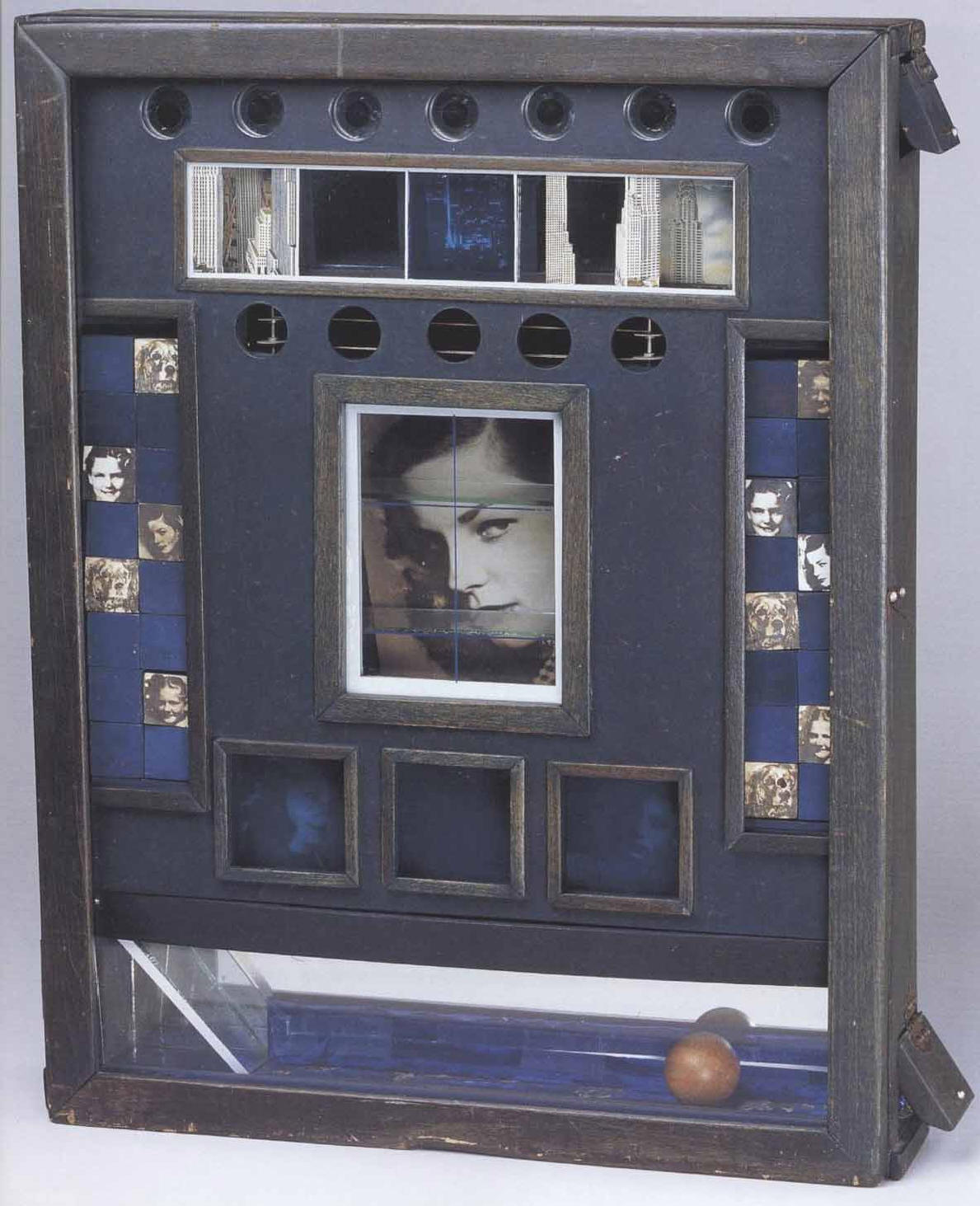
Penny Arcade Portrait of Lauren Bacall by Joseph Cornell I was going to write a long account of all the various things I read, saw, listened to, etc. this year, as a way of preserving some of the experience of the year for myself, and maybe offering some amusement for the occasional random reader ... but the drafts became unwieldy, and nobody, including me, wants to read all that. (I did the math and figured out that I was assigned to read about 50 books this year by teachers in classes I took, and then I read gazillions more both for my own research and to prepare for the Ph.D. general exam, for which I needed to be ready to answer questions about any English and American lit from Beowulf till now.) Here, then, are mere glimpses at some things that stick out for one reason or another....

Guy Davenport on Writing and Reading

Image
Guy Davenport, illustration from Apples & Pears I've just begun reading Andre Furlani's Guy Davenport: Postmodern and After , a magnificent book (so far), and went to track down one of the items cited there, a 2002 interview by B. Renner for the website Elimae . Alas, the site seems to have died, but god bless the Wayback Machine: here it is, cached. The interview is not as meaty as some others, for instance Davenport's Paris Review interview , but it's always interesting, and I was particularly struck by this: DAVENPORT: At Duke I took Prof Blackburn's Creative Writing course (Bill Styron and Mac Hyman were in the class) and got the wrong impression that writing is an effusion of genius and talent.  Also, that writing fiction is Expression of significant and deep inner emotion.  It took me years to shake off all this.  Writing is making a construct, and what's in the story is what's important.  And style: in what words and phrases the story is...

"Life’s too short for anxious score-keeping"

Image
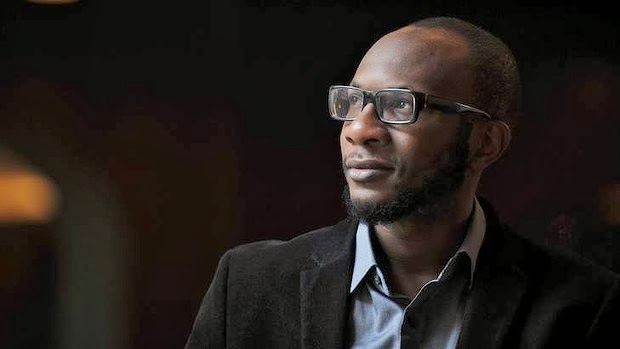
photo of Teju Cole by Wayne Taylor   From a Q&A in the New York Times with Teju Cole: What books are you embarrassed not to have read yet? I have not read most of the big 19th-century novels that people consider “essential,” nor most of the 20th-century ones for that matter. But this does not embarrass me. There are many films to see, many friends to visit, many walks to take, many playlists to assemble and many favorite books to reread. Life’s too short for anxious score-keeping. Also, my grandmother is illiterate, and she’s one of the best people I know. Reading is a deep personal consolation for me, but other things console, too.

You're Doing It Wrong in the Mirror

Image
via Wikimedia Commons We can argue about whether Hamlet is right or not when he claims that art holds a mirror up to nature. But let’s just say he is. Here’s what Hamlet doesn’t say: that art is a mirror you choose to pick up to see yourself. Art shows you a mirror. That thing you see in there isn’t supposed to be your pre-conceived self-image. It’s something strange, and alien, and scary, or ridiculous, or dull. But it’s something that demands engagement. And sometimes, it becomes something that you realize is in fact you — but that’s not meant to be a happy realization. If the thing you see when you look into a book looks exactly like what you think you look like, you’re doing it wrong. —Holger Syme, "The Loneliness of the Old White Male"

Rejecting Doris Lessing

Image
When crime writer Robert Galbraith was revealed to be J.K. Rowling, I of course thought of Richard Bachman and Stephen King, but I also thought of Jane Somers and Doris Lessing . Lessing wrote and submitted two books under the Somers pseudonym, they were rejected by her publisher (Jonathan Cape) in Britain, and when they were eventually published by Michael Joseph in the UK and Knopf in the US, they were barely noticed and didn't sell well. The story itself is interesting and, as these stories tend to do, reveals much about the power of expectations created by a recognizeable writer's name. Now, in a short piece at the New Yorker website, James Lasdun has revealed himself to be the in-house reader at Jonathan Cape who rejected Lessing's first Somers novel . Once Lessing's ruse was revealed, it seems he was a bit of a laughingstock, which is unfortunate — I expect most, if not all, of the people who criticized him for rejecting the book would probably have don...

Recent Reading

Image
Blogging always slows to a crawl during the second half of a semester, but I was surprised to see that it's been almost a month since I last posted here. Egads. I've hardly had a moment to breathe, though. For now, I just want to capture a few moments of reading from the recent weeks.

Learning to Read, Still

Joanna Scott on William Faulkner: Writing that flirts with incoherence can just as readily flounder as writing characterized by simplicity and composure. There is no reliable formula for originality, and strategies that are distinguished as innovative in their first incarnation can quickly become stale in the hands of lesser artists. It’s all too easy to conflate dense prose or jumbled narrative structures with literary ambition. But in this age of trending and blogging, with paragraphs growing shorter and the spaces between them growing larger, it’s also easy to dismiss the kind of fiction that might not yield readily, docilely, to our first attempt to comprehend it. This is the worry that [C.E.] Morgan and [John Jeremiah] Sullivan express; they know how quickly readers—and writers—will turn away from fiction that dares to cast itself as difficult. Sullivan admits that he has done the same. And when, in The New York Times , a contemporary writer derides Ulysses as “a professor’s bo...

The Worst Years of the Book as an Object

A fascinating interview at Boston Review with the always-already-fascinating Richard Nash: ...I’m tremendously optimistic about the future of the book as an object. I think the worst years of the book as an object have been the last 50 years. [...] Basically, when you’ve got an industry that is pushing out $25 billion worth of physical products into a supply chain, the vast majority of businesses are going to try to cut costs and increase revenues. And the simplest way to cut costs is going to be on the production side. So if the core of the business is no longer a supply chain, but rather the orchestration of writing and reading communities, the book is freed of its obligation to be the sole means for the broad mass dissemination of the word, and instead become a thing where the intrinsic qualities of the book itself can be explored. And much more about publishing, reading, Cursor , communities, etc.

Use and Abuse

Rohan Maltzen writes a memo to Marjorie Gerber about Gerber's new book The Use and Abuse of Literature : You are caught, I think, in the tension many of us feel between our theoretical commitment to an inclusive approach to literature (some aspects of which you discuss in your chapter on the literary "canon") and our deep appreciation for the aesthetic and intellectual richness of certain texts. As professionals, we have learned that this appreciation is itself conditioned by ideas about what "literature" is and how to measure its greatness. You celebrate close reading and lament a tendency (of which you give no specific examples, which is a problem) for "the historical fact [to take] precedence over the literary work." However, close reading works best—as you glancingly acknowledge when you tie it to Archibald MacLeish's lines "A poem should not mean / But be"—on texts that are verbally complex, ambiguous, and densely metaphorical, rath...

"A Good Style Simply Doesn't Form"

Via the marvelous blog Reading Markson Reading , some words of wisdom from F. Scott Fitzgerald to his daughter: A good style simply doesn’t form unless you absorb half a dozen top-flight authors every year. Or rather it forms but instead of being a subconscious amalgam of all that you have admired, it is simply a reflection of the last writer you have read, a watered-down journalese. Fitzgerald's letter includes some recommended books, and blogger Tyler Malone follows up with a letter from David Markson to his own daughter offering a list of some favorite books. Great stuff.

Ways of Reading

Ron Silliman has written an interesting post about, among other things, how he reads: I’m always reading a dozen books at once, sometimes twice that many. [...] In part, this reading style is because I have an aversion to the immersive experience that is possible with literature. Sometimes, especially if I’m "away" on vacation, I’ll plop down in a deck chair on a porch somewhere with a big stack of books of poetry, ten or twelve at a time, reading maybe up to ten pages in a book, then moving it to a growing stack on the far side of the chair until I’ve gone through the entire pile. Then I start over in the other direction. I can keep myself entertained like this for hours. That is pretty close to my idea of the perfect vacation. I’ve had this style of reading now for some 50 years – it’s not something I’m too likely to change – but I’ve long realized that this is profoundly not what some people want from their literature, and it’s the polar opposite of the experience of ...

Worlds Apart

Image
I was writing a comment in reply to Ray Davis on a previous post, and realized it might be better as a post than a comment. Here's Ray's original comment : Huh. The  "problem that had long puzzled"  Josipovici was precisely -- like  precisely , except for some name-swapping which sharpens the point, like Joyce for Mann and Beckett for Bernhard -- what led me to start looking into science fiction in 1976. (And eventually led me here, of course.) From what I've read of Josipovici, I suspect he arrived at different answers than myself. My feelings are similar, and are one of the reasons that though my particular pleasures are different from Josipovici's, I'm sympathetic to his argument. Those feelings are also a reason why I have a knee-jerk negative reaction to arguments that pose science fiction (broadly defined) as the opposite of Modernism .  (Different, sure.  Opposite, nope.)  That's an interpretation that doesn't work for me because it co...

Books I'd Be Reading If I Had the Time

Image
I'd intended to read a bunch of new fiction this spring, but then decided to reconfigure some of the classes I'll be teaching in the fall, which meant having to plunge into all sorts of other books (about which I'll be writing here soon, I expect).  I'm loving the research, since it appeals to a bunch of my various obsessions (e.g. how white people represent whiteness and non-whiteness), but it's left me with exactly no time for other reading.  By the summer, I'm hoping to have the research mostly done, and thus expect to be able to freely read all sorts of things, but until then, here are some of the books I'd be reading if I weren't reading other books...*   A Book of Endings by Deborah Biancotti.  Deb very kindly sent me a copy of this collection of her short stories, and I've only had a chance to read a couple so far, which makes me sad, because I very much want to read them all -- not just because I've enjoyed what I've read so far, b...

Under the Dome by Stephen King

Stephen King's new novel, Under the Dome , is a tremendously entertaining and often emotionally affecting story about, among other things, cruelty and pity. King has called Lord of the Flies " the book that changed my life ", and its influence feels especially strong here, where a Maine town is turned into an island when a mysterious, invisible dome suddenly covers it, and adults begin to behave like the children in Golding's novel. There are political overtones to the book, with the main villain, "Big Jim" Rennie, sounding an awful lot like Big Dick Cheney; with crisis turned into political opportunity; with fear used as a tool for consolidating power; with brutality replacing sense. These connections to the world outside the book are important, sometimes amusing and sometimes even insightful, but they're also obvious (intentionally so, I'd bet). More complex and interesting is the novel's narrative voice and how it relates to the revelatio...

Best of the Millennium!

Image
The Millions polled a bunch of writers to come up with a fun list of really good books : It’s a bit early, of course, to pass definitive judgment on the literary legacy of the ’00s, or how it stacks up against that of the 1930s, or 1850s. Who knows what will be read 50 years from now? But, with the end of the decade just a few months away, it seemed to us at The Millions a good time to pause and take stock, to call your attention to books worthy of it, and perhaps to begin a conversation. As of this writing, they haven't revealed the top two, but numbers 3-20 are there, and it's a good list -- I'm amazed, actually, at how many of them I've read all or part of. There's not a book on there I would fight vociferously against including, even if novels like Gilead aren't really to my taste (though I've used that book in a couple of classes, so I wouldn't say I hate it ... I just don't see what it seems everybody else on Earth sees in Marilynne Robinson...

So Many Books...

Image
I have very little time for extra reading right now, which is frustrating, because a bunch of interesting books have arrived recently. (The good news: I will be making a substantial change of life this summer, and with luck that change will open up a lot more time for reading and writing. Just have to survive the next three months...) Here, then, are some comments on books I have not yet had much time to look at, but am keeping on my To Be Read pile... Weird Tales Issue 348: Word on the street is that Ann VanderMeer's second issue as fiction editor of Weird Tales is awesome (and not just because of the fiction). I enjoyed Ann's first issue, and intend to get to this one ... very...........soon......... Speaking of Ann VanderMeer, I also now have copies of two anthologies she and some guy named Jeff edited: The New Weird and Steampunk . I've actually been so excited by both that I couldn't help myself from dipping into them, even though I should be doing work on ...

The Scarecrow-in-the-Desert Effect

Image
I have been trying to pinpoint what, exactly, I dislike about many contemporary fictions, a certain effect or technique. (Perhaps a lack of effect or technique.) What I dislike feels to be the same in each story or novel, at least in what it does in my brain, despite these stories and novels being from all different genres. Thus, it seems to be some sort of effect of the prose, a way the narrative is presented, an early roadblock on the path from the page to my brain. I have avoided trying to write about it, because I know I will fumble around as I attempt to describe and analyze the problem, but what's a blog for if not to work through ideas... The provocation for this writing was a quick blip from Galleycat about an article in Wired ( "Why Sci-Fi is the Last Bastion of Philosophical Writing" ). In describing the article, Ron Hogan wrote, "So why doesn't the establishment take science fiction more seriously? Because, [Clive Thompson] observes, 'the ge...