Posts

Showing posts with the label language

A Sparkling Sentence
Image
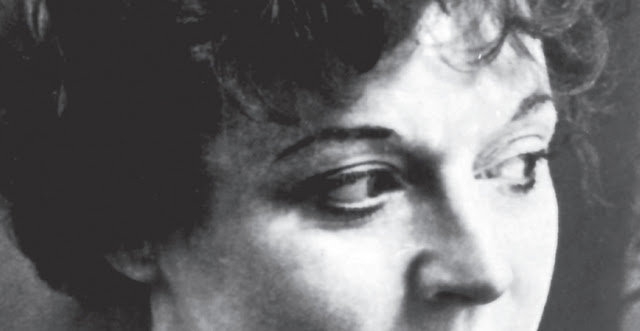
This year is Muriel Spark's centenary , and it's been fun to encounter the various tributes to her. I decided to reread The Prime of Miss Jean Brodie , her most famous book, because I haven't read it in twenty years or so, though much of it remains vivid in my memory. It was my first Spark, and while I think I appreciated the sharpness of her language at the time, I valued other things in the book. Rereading it now, it is her sentences that amaze me most, because I've learned over the years that one of the greatest pleasures in reading Spark is the pleasure of watching her make complex linguistic acts look easy. Here's an example that I stand in awe of, a single sentence that is a short story unto itself: Even stupid Mary Macgregor amazed herself by understanding Caesar’s Gallic Wars which as yet made no demands on her defective imagination and the words of which were easier to her than English to spell and pronounce, until suddenly one day it appeared...
Reality Affects

Image
Bonnie Nadzam's recent essay at Literary Hub , "What Should Fiction Do?" , is well worth reading, despite the title. (The only accurate answer to the question in the title [which may not be Nadzam's] is: "Lots of stuff, including what it hasn't done yet...") What resonates for me in the essay is Nadzam's attention to the ways reality effects intersect with questions of identity — indeed, with the ways that fictional texts produce ideas about identity and reality. I especially loved Nadzam's discussion of how she teaches writing with such ideas in mind. Nadzam starts right off with a bang: An artistic practice that perpetually reinforces my sense of self is not, in my mind, an artistic practice. I’m not talking about rejecting memoir or characters “based on me.” What I mean is I don’t have the stomach for art that purports to “hold up a mirror to nature,” or for what this implies, philosophically, about selfhood and the world in which we li...

Let's Do the Twist: How to Be Both by Ali Smith

Image
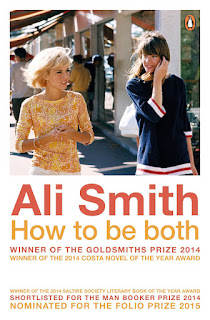
I've been meaning to catch up with Ali Smith's novels for a while now, having previously only read Hotel World , and so when it came time this summer to formulate reading lists for my PhD qualifying exams, I stuck How to Be Both on the fiction section for the Queer Studies list. (This also explains why I was writing about The Invaders recently...) How to Be Both turns out to be even more appropriate to my Queer Studies studies than I'd suspected from reading reviews, and it shows how the structures of fiction can be at least as provocative and productive as certain types of social and political philosophy. How to Be Both is generally a very readable, enjoyable book — in some ways deceptively so. In that, it reminds me of Kurt Vonnegut's best books, which manage to play with some complex ideas in light, entertaining ways. (Smith's novel would make a marvelous companion to Vonnegut's Mother Night in a course on the novel and history...) How to Be Both d...

Of Purpose, Audience, and Language Guides

Image
There are lots of reasons that the University of New Hampshire , where I'm currently working toward a Ph.D. in Literature , should be in the news. It's a great school, with oodles of marvelous faculty and students doing all sorts of interesting things. Like any large institution, it's got its problems (I personally think the English Department is underappreciated by the Powers That Be, and that the university as a whole is not paying nearly enough attention to the wonderful programs that don't fall under that godawful acronym-of-the-moment STEM , but of course I'm biased...) Whatever the problems, though, I've been very happy at the university, and I'm proud to be associated with it. But Donald Trump and Fox News or somebody discovered a guide to inclusive language gathering dust in a corner of the UNH website and decided that this was worth denouncing as loudly as possible, and from there it spread all over the world . The UNH administration, of cours...

Whose Word Crimes?

Image
Yesterday, "Weird Al" Yankovic released a video for his song "Word Crimes" , a parody of Robin Thicke's "Blurred Lines" . Since a lot of people I know are language folks of one sort or another, I saw it flow and re-flow through various streams of social media. But I had qualms. I love Weird Al, and he's been a formative influence on my life, since I started listening to him when I was a kid. (My entire sense of humor could be described by three childhood influences: Weird Al, the Marx Brothers, and Monty Python.) I also think the detestable "Blurred Lines" is ripe for ridicule and attack. And I like words. But how are we to understand the speaker in "Word Crimes"? Most people I saw who shared the video seemed to identify with the speaker. This is not as disturbing as people identifying with the rapey speaker of "Blurred Lines", but it reveals a certain cruelty in the feelings of people who want to be identifie...

National Literature

From address given by Sema Kaygusuz, translated by Caroline Stockford : If I were to have to talk personally of what drives my own writing I would quite naturally have to step outside the framework of national literature. In fact, all of the world’s writers are actually stateless. Like many of them, I too have a feeling of separation that cannot be alleviated, a deep feeling of exile and disquietude within stemming from feeling cut off from nature. I too feel the discord of not being able to conform to hierarchical time and the resulting sensation of innate fragmentation that comes from this. On the other hand, when, as a being endowed with memory, I try to create for myself an intellectual framework I find myself experiencing a narcissistically comforting feeling that comes from being an inhabitant of a geography that has deep historical roots spread from the Mediterranean basin to Mesopotamia and from the Middle East to Anatolia. In other words, thanks to something primeval I a...

False Teeth and the Foreign Office

Terry Eagleton, from a review of the 50th anniversary edition of Erich Auerbach's Mimesis: To describe something as realist is to acknowledge that it is not the real thing. We call false teeth realistic, but not the Foreign Office. If a representation were to be wholly at one with what it depicts, it would cease to be a representation. A poet who managed to make his or her words ‘become’ the fruit they describe would be a greengrocer. No representation, one might say, without separation. Words are certainly as real as pineapples, but this is precisely the reason they cannot be pineapples. The most they can do is create what Henry James called the ‘air of reality’ of pineapples. In this sense, all realist art is a kind of con trick – a fact that is most obvious when the artist includes details that are redundant to the narrative (the precise tint and curve of a moustache, let us say) simply to signal: ‘This is realism.’ In such art, no waistcoat is colourless, no way ...

Writing Tools

Image
photo by Eric Schaller I'm teaching a course called "Writing and the Creative Process" right now, and one of the things I would like to offer the students is a list of tools I've found actually helpful when writing -- computer programs and reference books, mostly. I thought it might be fun to open up the conversation and get some recommendations from people other than me, since my own practice is peculiar to, well, me. So, a question for you, O Denizens of the Internets: What have been the most helpful tools for you when writing? (And "writing" doesn't just mean you're a professional novelist whose last few books were sold to Hollywood. We all write things in our lives, whether business letters or shopping lists of secret poems we never show anybody. Everybody is qualified to answer this question who wants to!) I'll put my own essential items below the fold...

Out There

Some things of interest... If you liked my recent column on Sexing the Body , evolutionary psychology, gender, etc., then you should really keep your eyes on the ongoing series of posts about sex science at the essential (though not essentialist) Echidne of the Snakes . Over the holidays, she read three books on the topic -- one I mentioned in my column, and have also praised before, Pink Brain, Blue Brain ; but also two I haven't yet seen, Delusions of Gender and Brainstorm: The Flaws in the Science of Sex Differences by Rebecca M. Jordan-Young. At the very least, read Echidne's first post of seven short conclusions reached after finishing the books. Great, great stuff. And if you're curious to know more about this stuff, and Pink Brain, Blue Brain in particular, here's a lecture by its author, Lisa Eliot. I was hoping Aaron Bady would respond to the New York Times article  "In Sudan, a Colonial Curse Comes Up for a Vote" , and lo and behold, my w...

Hopefully...

Image
I woke up this morning and thought, "I really need good ammunition against people who say that 'hopefully' can't be used to mean 'I hope'," because that's the sort of thing I tend to wake up thinking (yes, my paranoias are often about being mugged by style goons). I fired up my ol' computer machine and plugged into the intertubes and went immediately to Language Log , where I got a concise explanation of what I needed : Speaker-oriented (or "stance") adverbial hopefully has been taking abuse pretty steadily for 30 or more years (see MWDEU ). Linguists are mostly just baffled by this disparagement; see the discussion in the American Heritage Book of English Usage , where it's noted that " hopefully seems to have taken on a life of its own as a shibboleth." But the word fits right into long-standing patterns of the language -- cf. frankly in "Frankly, this soup stinks" and surprisingly in "Surprisingly,...

One Story: Respect for Tradition

Image
One Story is a marvelous magazine (and not just because they published me -- that should, perhaps, be held against them...) and I can testify that it makes a great gift for people who like to read but generally feel too busy to do so, because receiving a nicely-produced story every three weeks or so in the mail is great fun. One Story now and then asks for donations, because the magazine is a non-profit and doesn't run ads. Clifford Garstang pointed out that a recent solicitation included this description of the "Editor" donation level: Editor: $100 – I’ll pay one author for their story Mr. Garstang notes that there is, according to certain interpretations of English usage, a problem with agreement between the one author and the plural pronoun their . What he doesn't say, though, is that One Story is simply showing their respect for the history of English literature and the language itself. According to the indispensible Merriam-Webster Dictionary of English U...

Facial Noise

From a review of Arthur Bentley's Linguistic Analysis of Mathematics in the April 1936-June 1938 issue of Language , as quoted by Mark Liberman at Language Log (in a post that ends with Ursula LeGuin and Cordwainer Smith): When Weiss speaks of 'language' he means exactly what he says, the language which is studied by linguists, the noise you make with your face.

After the Apocalpyse, Discoveries

Image
Scott McLemee's Inside Higher Ed column this week tackles a topic I took on myself recently : the culling of books. It caused me to reflect on living with a substantially reduced library, since I am now post-cull, and am actually only living at the moment with a small group of the books I saved, since the majority are still in storage back in New Hampshire. While I enjoy not feeling quite so entombed by tomes as I used to be, again and again I've wanted to grab a book I know I have, only to discover it's not here. It's a strange sensation, the sensation of seeing something in peripheral vision that disappears when you turn your head, the sensation of seeking ghosts. Not that having fewer choices of what to read has stopped me from reading too many books at once. As of this moment, I am in the midst of reading Dangerous Space by Kelley Eskridge, Chaucer: His Life, His Works, His World by Donald R. Howard, The Virtu by Sarah Monette, Beyond This Horizon by Robert ...

In Praise of Long Sentences

I've just begun reading Lucius Shepard's short novel Viator , and even though I'm only 35 pages in, it has already worked its way close to my heart by being constructed primarily (so far) of long, luxurious sentences, sentences that bloom with modifiers and clauses and details, sentences that are seldom awkward, because even though Shepard's prose has often been impressive since he first came to prominence in the early 1980s, his skill with language is now so polished and apparently effortless that sentences that feel remarkable on a first reading become even more astonishing when experienced a second or third time, and the cumulative effect of such stylistic high-wire acts being repeated page after page is to create a richness and density that many stories don't have at twice (or more) the length. Of course you'd like an example. Here, then, is the first paragraph of the book: Wilander had grown accustomed to his cabin aboard Viator . Small and unadorned...