Posts

Showing posts with the label ecology

About That Life: Barry Lopez and the Art of Community

Image
My new book About That Life: Barry Lopez and the Art of Community has now been published by Punctum Books as an Open Access work, which means there is a free PDF and the paperback is published at a reasonable price. The book's copyright is replaced by a Creative Commons Attribution-Noncommercial-ShareAlike 4.0 International license, giving everyone the freedom to copy, share, and remix the work for noncommercial purposes. This summer, I'm going to play around with alternate forms myself (at the very least an ePub file for ebooks, but maybe also an illustrated website). About That Life was not going to be a book. I began writing it moments after I learned of Barry Lopez's death on Christmas Day, 2020. Lopez had been my workshop leader at the Bread Loaf Writers' Conference in the summer of 2000, and he really changed my approach to life and especially to writing. I wanted to write a short article in his memory, and I especially wanted to share the writing exercises he h...

For Barry Lopez on His 78th Birthday

Image
  "Barry was not one to invest in answers. It was the questions that pulsed in his body and propelled him forward no matter where he traveled in the world." —Debra Gwartney, "Fire and Ice"   Barry Lopez died on December 25, 2020, shortly before January 6, 2021, which would have been his 76th birthday. Of course, that date two years now lives in infamy, a day of insurrection in the United States. Within the next few months, a little book I wrote in the wake of that day will be published: About That Life: Barry Lopez and the Art of Community . (It was originally scheduled to come out this past fall, but the publisher got a little backed up.) It will be published as an open-access book with a Creative Commons License by Punctum Books, so the PDF will be freely available and the paperback will be as affordable as possible. I will have more to say about the book when it is released. I want to note Lopez's birthday today, however. Of the people I have met in my life, ...

The Rats in Our Walls

Image
  It began as a blog post. I was just going to write here some quick thoughts about H.P. Lovecraft's 1924 story "The Rats in the Walls" and how the narrator made me think about people who've lost their brains to QAnon conspiracies.  Then I couldn't help thinking about the concept of degeneracy, and of eugenics, and of Madison Grant, a name once famous and now forgotten, literally erased from the archives. I returned to a book I had read a decade or more ago, Jonathan Spiro's excellent Defending the Master Race: Conservation, Eugenics, and the Legacy of Madison Grant , a book that explains so much about the United States, popular ideas of science, the troubled history of environmentalism, and, in its own way, people like H.P. Lovecraft.  And then I wondered if maybe we ought to see Lovecraft's narrators as deeply unreliable rather than as visionaries. What if Lovecraft's fiction is a testimony to yearning as much as to horror, and what if the yearnin...

The Narrative of Dead Narrative

Image
Photo by Ivars Krutainis on Unsplash 1. Suddenly, it feels like post-war France again. Two essays were published within days of each other, both denouncing something they call narrative : "Narrative in the Anthropocene Is the Enemy" by Roy Scranton at LitHub and "Storytelling and Forgetfulness" by Amit Chaudhuri at LA Review of Books . Is the nouveau roman back in vogue? Neither essay is especially illuminating or compelling, I don't think, but it's interesting that they both appeared so close together and from such different writers, with quite different purposes. That fact (their synchronicity) more than anything else is what caught my attention. What work, I wondered, is the concept they call narrative doing within these essays? In his essay, Roy Scranton is doing what he's known for, a shtick that was provocative when Learning to Die in the Anthropocene was published and Scranton positioned himself as the  Norman O. Brown  of the...

Elements of Style for the Age of Blight

Image
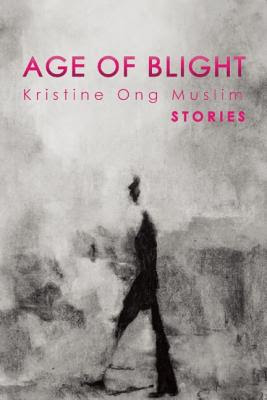
Introductory As the world burns away in political crises and ecological catastrophe, writers strain against meaninglessness, against the sense that their work is nothing more than a few grains of confectionary sugar tossed to a howling wind. What forms might fit our time, what stories might we tell against a future of no-one left to listen to stories? No other label for where we are and where we’re going as a world seems quite so accurate as the one Kristine Ong Muslim has used for her recent collection of stories, The Age of Blight . It is a book of glimpses, shards, and lost myths; it works like a nightmare recollected during the day before you know the nightmare will return and sleep cannot be kept at bay indefinitely. The Age of Blight and a thousand books like it will not forestall our own Age of Blight, but Muslim offers strategies for storytelling as the blasted era blightens. Her techniques for writing fiction are ones that make demands on the reader, but they...