Posts

Showing posts with the label teaching

The Strength of Kindness
Image
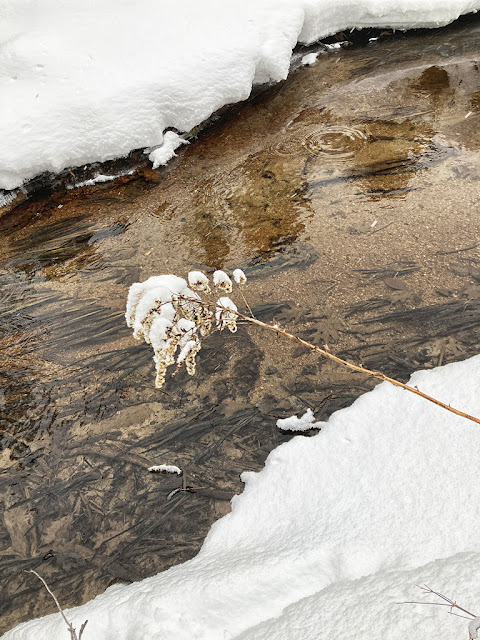
  Over at my academic blog, I have written a post about ideas of strength and kindness . Part of it is about teaching (hence the reason it is at the academic blog), but a lot of it is also about reading and writing, and it ends with a poem by Liu Tsung-Yuan, so it may be of interest to a more general audience as well. Here is how the post begins: Take a moment, settle yourself, and note your immediate emotional response to these words: kindness joy contemplation generosity love peace Now think about them in the context of your work. Would your work be better if there were more of these things? Do you feel that they are relevant to what you do every day? I’ll be honest: a deep part of myself resists these words. On one hand, this makes no sense. Since adolescence, I have described myself as a pacifist (or aspiring pacifist); I don’t have many heroes (I’m skeptical of the whole concept) but if I have any they are people who in one way or another devoted themselve...
On Academic Book Prices, and Other Subjects...

Image
Over at my other blog, Finite Eyes (about academic subjects, and things related to my job as Interim Director of Interdisciplinary Studies at Plymouth State), I've got a few new posts, including one on the pricing of academic books , which might be of at least vague interest to Mumpsimus readers. There's also a post thinking about John Warner's excellent book Why They Can't Write . And a post that's gotten tons of traffic after being Tweeted out by a few prominent academics' accounts: "Cruelty-Free Syllabi" .

Why They Can't Write by John Warner

Image
Over at my more academic-and-pedagogy-focused blog, Finite Eyes , I have written a post of thoughts about and inspired by John Warner's valuable new book, Why They Can't Write: Killing the Five-Paragraph Essay and Other Necessities . A taste: Why They Can’t Write is not primarily aimed at writing teachers, particularly not teachers with some background in composition & rhetoric. While there’s certainly much of interest to comp & rhet folks, Warner’s goal is to make available to a general audience the insights that have been central to composition pedagogy and scholarship for decades. “With this book,” Warner says on page 5, “I want to speak to policy makers, educators, parents of school-aged children, and even students themselves, so we can engage in conversation and collaboration that will meet the needs of our culture and communities.” As I read it, I thought about who I would want to give this book to once it comes out in paperback. Yes, I’d love all the co...

Experiments with Feedback and Grading in a First-Year Writing Course

Image
It's been a while since I last wrote here about teaching, for a simple reason: I've been teaching the same course, First-Year Writing, for a couple of years now, and haven't really had much to say about it. (Literature grad students at UNH used to be able to get some lit courses to teach after a required year of teaching what we colloquially call 401, but various forces related to lower enrollments made my cohort the last to get any lit courses [when I taught Literary Analysis and then an American lit survey], and so for the past two years I've taught nothing but 401). For the upcoming year, the university awarded me a Dissertation Year Fellowship, so I will not be teaching. Before all memory of the past few years leaves my mind, here are some reflections... This academic year, bored to death with my own teaching, I decided to experiment with the course a bit, and those experiments worked out well generally, so perhaps they are worth sharing here. Most of my ex...

Of Moral Panics, Education, Culture Wars, and Unanswerable Holes

Image
via Wikimedia Commons I demonstrate hope. Or the hope for hope. Or just more unanswerable holes. — Mary Biddinger, "Beatitudes" (I keep writing and rewriting this post.) I thought I knew what I felt about the academic controversy du jour  (a letter sent by a University of Chicago dean to incoming students, telling them not to expect trigger warnings, that academia is not a safe space, that open discussion requires them to listen to speakers they disagree with, etc.) — but I kept writing and rewriting, conversing and re-conversing with friends, and every time I didn't know more than I knew before. Overall, I don't think this controversy is about trigger warnings, safe spaces, etc. Overall, I think it is about power and access to power. But then, overall I think most controversies are about power and access to power. Overall— The questions around trigger warnings, safe spaces, and campus speakers are complicated, and specific situations must ...

Of Moral Panics, Education, Culture Wars, and Unanswerable Holes

Image
via Wikimedia Commons I demonstrate hope. Or the hope for hope. Or just more unanswerable holes. — Mary Biddinger, "Beatitudes" (I keep writing and rewriting this post.) I thought I knew what I felt about the academic controversy du jour  (a letter sent by a University of Chicago dean to incoming students, telling them not to expect trigger warnings, that academia is not a safe space, that open discussion requires them to listen to speakers they disagree with, etc.) — but I kept writing and rewriting, conversing and re-conversing with friends, and every time I didn't know more than I knew before. Overall, I don't think this controversy is about trigger warnings, safe spaces, etc. Overall, I think it is about power and access to power. But then, overall I think most controversies are about power and access to power. Overall— The questions around trigger warnings, safe spaces, and campus speakers are complicated, and specific situations must ...

Workshops of Empire by Eric Bennett

Image
Eric Bennett  has an MFA from Iowa , the MFA of MFAs. (He also has a Ph.D. in Lit from Harvard, so he is a man of fine and rare academic pedigree.) Bennett's recent book Workshops of Empire: Stegner, Engle, and American Creative Writing during the Cold War is largely about the Writers' Workshop at Iowa from roughly 1945 to the early 1980s or so. It melds, often explicitly,  The Cultural Cold War  with  The Program Era , adding some archival research as well as Bennett's own feeling that the work of politically committed writers such as Dreiser, Dos Passos, and Steinbeck was marginalized and forgotten by the writing workshop hegemony in favor of individualistic, apolitical writing. I don't share Bennett's apparent taste in fiction (he seems to consider Dreiser, Dos Passos, Steinbeck, Thomas Wolfe, etc. great writers; I don't), but I sympathize with his sense of some writing workshops' powerful, narrowing effect on American fiction and publishing for at...

Activists of the Imagination: On English as a Department, Division, Discipline

Image
Earlier this month, just back from a marvelous and productive MLA Convention in Austin, Texas, I started to write a post in response to an Inside Higher Ed article on "Selling the English Major" , which discusses ways English departments are dealing with the national decline in enrollments in the major. I had ideas about the importance of senior faculty teaching intro courses (including First-Year Composition), the value of getting out of the department now and then, the pragmatic usefulness of making general education courses in the major more topical and appealing, etc. After writing thousands of words, I realized none of my ideas, many of which are simply derived from things I've observed schools doing, would make much of a difference. There are deeper, systemic problems, problems of culture and history and administration, problems that simply can't be dealt with at the department level. Certainly, at the department level people can be experts at shooting t...

On Teaching Writing

Image
Jan Steen, School Class with a Sleeping Schoolmaster A writer recently wrote a blog post about how he's quitting teaching writing. I'm not going to link to it because though it made me want to write this post of my own, I'm not planning either to praise or disparage the post or its author, whom I don't know and whose work I haven't read (though I've heard good things about it). Reading the post, I was simply struck by how different his experience is from my own experience, and I wondered why, and I began to think about what I value in teaching writing, and why I've been doing it in one form or another — mostly to students without much background or interest in writing — for almost twenty years. I don't know where the quitting teacher works or the circumstances, other than that he was working as an adjunct professor, as I did for five years, and was teaching introductory level classes, as I continue to do now that I'm a PhD student. (And in som...

Of Purpose, Audience, and Language Guides

Image
There are lots of reasons that the University of New Hampshire , where I'm currently working toward a Ph.D. in Literature , should be in the news. It's a great school, with oodles of marvelous faculty and students doing all sorts of interesting things. Like any large institution, it's got its problems (I personally think the English Department is underappreciated by the Powers That Be, and that the university as a whole is not paying nearly enough attention to the wonderful programs that don't fall under that godawful acronym-of-the-moment STEM , but of course I'm biased...) Whatever the problems, though, I've been very happy at the university, and I'm proud to be associated with it. But Donald Trump and Fox News or somebody discovered a guide to inclusive language gathering dust in a corner of the UNH website and decided that this was worth denouncing as loudly as possible, and from there it spread all over the world . The UNH administration, of cours...

Gratis & Libre, or, Who Pays for Your Bandwidth?

Image
via Philip Taylor, Flickr In talking with Robin DeRosa about open educational resources (OER), a lot of my skepticism was focused on (and continues to be focused on) the question of who pays for it. If I'm not just skeptical but also cynical about a lot of the techno-utopian rhetoric that seems to fuel both the OER advocates and, even more so, people who associate themselves with the idea of Digital Humanities , it may be because I've been paying attention to what the internet has done to writers over the last couple decades. It's not all bad, by any means — this blog is one of example of that, I continue to try to write mainly for online venues so that my work can be relatively easily and broadly accessed, and I put most of my syllabi online. I can do that because I have other income and don't rely on this sort of writing to pay the bills. Thus, in my personal calculations, accessibility is more important than revenue. But that freedom to choose accessibility ...

Q&A on Open Educational Resources with Robin DeRosa

Image
My friend and colleague (when I was adjuncting at Plymouth State University ) Robin DeRosa has been spending a lot of time recently thinking about and working with "open educational resources" (OER), which Wikipedia (today)  defines as "freely accessible, openly licensed documents and media that are useful for teaching, learning, and assessing as well as for research purposes."  I've been following Robin's ideas about OER, and at a certain point realized I didn't really understand the conversation. Partly, this was because most of what I was reading was Twitter feeds and Twitter can be confusing, but as an outsider to the OER world, I also didn't know what sorts of assumptions advocates were working from. I was especially concerned when thinking about academic labor — all the talk of giving things away and making things free sounded to me like a wonderful idea that would in practice just devalue academic work and lead to further exploitation ...

The Perils of Citation

Image
In my review of John Clute's collection  Stay ,  I had some fun at Clute's expense with his passionate hatred of certain types of academic citation, and I pointed out that often the problem is not with the official citation format, which usually has some sort of logic (one specific, perhaps, to its discipline), but rather that the problem is in the failure to follow the guidelines and/or to adjust for clarity — I agreed that some of the citations used in Andrew Milner’s Locating Science Fiction  are less than helpful or elegant, but the fault seemed to me to lie at least as much with Milner and Liverpool University Press as with the MLA or APA or University of Chicago Press or anybody else. Just because there are guidelines does not mean that people follow them. I now have an example from an MLA publication itself, and it's pretty egregious, though I may only feel that way because it involves me. The citation is in the book Approaches to Teaching Coetzee's ...

Canonicity and an American Literature Survey Course

Image
This term, I taught an American literature survey for the first time since I was a high school teacher, and since the demands of a college curriculum and schedule are quite different from those of a high school curriculum and schedule, it was a very new course for me. Indeed, I've never even taken such a course, as I was successful at avoiding all general surveys when I was an undergrad. As someone who dislikes the nationalism endemic to the academic discipline of literature, I had a difficult time figuring out exactly what sort of approach to take to this course — American Literature 1865-present — when it was assigned to me. I wanted the course to be useful for students as they work their way toward other courses, but I didn't want to promote and strengthen the assumptions that separate literatures by national borders and promote it through nationalistic ideologies. I decided that the best approach I could take would be to highlight the forces of canonicity and n...

Canon? Balls!

Image
This past term, the course I taught was titled "Introduction to Literary Analysis" . It's the one specific course that is required for all English majors, and it's also available as a general education credit for any other undergraduates. Its purpose is similar to that of any Introduction to Literature class, though at UNH it really has one primary purpose: help students strengthen their close reading skills with fiction, poetry, drama, and nonfiction. (We're required to include all four, though the nonfiction part can be smaller than the others.) Next term, I'm teaching an American lit survey (1865-present) and have decided to focus it on the question of canonicity. So, for instance, we'll be using the appropriate volumes of The Norton Anthology of American Literature as a core text, but not just to read the selections; instead, we'll also be looking at the book itself as an anthology: what the editors choose to include and not, how the selectio...

Notes on Teaching First-Year Composition as a Film & Media Course

Image
It appears that next year I won't be teaching any first-year composition classes at UNH, which will put on hold an experiment I began this past term with FYC. (I'm teaching Literary Analysis this fall and probably a survey course in the spring.) I'll record here some thoughts on that experiment, both for my own future use and in case they are of use or interest to anyone else...

A Solution to Grade Inflation

Image
Wikimedia Commons I'm in the midst of grading student papers and portfolios, and so this blog post by Adam Kotsko hit home, particularly the end: ...the only real solution to grade inflation is to decouple college from debt and brutal meritocratic competition. Then people could study what they want to if they show an aptitude for it, and we could afford to do that because we’re the richest society ever in human history and maybe we can get by with fewer baristas so that people can enrich their lives, get in touch with their cultural heritage, and learn useful skills. It would cost money, but there are huge piles of money in corporate coffers and rich people’s bank accounts that are doing nothing but either sitting there or else promoting asset-price bubbles — so we could just take all that money away from them and do something that contributes to something with a recognizably human meaning and purpose. And then our grades would not be inflated and everyone would ...

Notes on a Sentence from "The Death of the Moth"

Image
Forced by some reductive power to declare a single favorite essay, mine would be "The Death of the Moth" by Virginia Woolf . It is a marvel of concision, and yet it contains the universe. It is an essay both personal and cosmic, material and spiritual. Whenever I teach writing, I use "The Death of the Moth" as an example of the interplay of form and content. (While I have seldom met a pairing I didn't want to deconstruct, the form/content binary is one I continue to find useful. Yes, the separation is problematic — what, in language, is content without form or form without content? — but I also find it a valuable way to talk about concepts that are otherwise invisible or easily muddled.) Usually, I take one sentence, scrawl it out on the board, and pick it apart. It's not always the same sentence, but recently I've been using this one: Yet, because he was so small, and so simple a form of the energy that was rolling in at the open window and drivi...

Film Textbooks, Take 3

Image
A solidly popular post here continues to be one I wrote in 2009 about textbooks for introduction to film courses . I updated it once , way back in 2011, but enough time has passed that it deserves a quick update again. First, I should say: Because I've started a Ph.D. at UNH , I'm not teaching film these days, except for a summer class online. So I haven't been thinking about film textbooks too much recently. But I do think about it, mostly because I really miss teaching film. It seeps into everything I do, though — this term, for instance, I'm taking a required course for all new grad students who are teaching First-Year Composition (yes, it's a little awkward having 15 years of teaching experience and taking a course like this...), and for my research project for the class I decided to research the use of film analysis in FYC classes. (If you're curious, you can see the results of all that research here . Creating a Weebly site was a class assignment, so ...

A Decade of Archives 9: 2004

Image
This is the ninth in a series of posts leading up to this blog's tenth anniversary on August 18. In each post, I look back on one year, sometimes specifically and sometimes generally. All the posts can be found  here . 2004 was the first full year of The Mumpsimus. It was also the year with the largest number of posts: 319. (These days, I'm able to get out about 100 or so in a year.) And it was the year when a relatively large number of people began to notice what was going on here. That initial attention is what made me think this was not, perhaps, just a useless lark. A lark, yes, and largely useless, yes, but maybe not completely so... The year began with a post about returning : I hadn't paid a lot of attention to the site at the end of 2003, having written one post in December and none in November. The first paragraph of that post indicates that I was still thinking of this as a site about, primarily if not exclusively, science fiction. The reason for my absence...