Posts

Showing posts with the label style

The Mere Wife by Maria Dahvana Headley

Image
I keep recommending Maria Dahvana Headley's most recent novel, The Mere Wife , to people, and so it seems I should write a little something about it. (Had my summer and, especially, fall been less fraught, I would have written about The Mere Wife  some time ago, because it's a terrific novel and Maria and I have been friends for more than 20 years now, making me very much inclined to tell the world when I think she's done great work. But life intervened, as it does. Here I am, though: World! The Mere Wife  is great work!) The Mere Wife   slyly elides some of the differences between novels, epics, and narrative poems. Novels are omnivorous monsters that eat up every form and mode they encounter, and a writer who knows this — who, in fact, revels in it — is set to wrangle and wrestle the beast into a powerful shape. Since The Mere Wife  is inspired by/riffing on  Beowulf ,  a raid on the fortresses of other storytelling forms is especially ...

Sentences Seeking, and Finding, Forms: On Some Passages in Barnaby Rudge

Image
William Gass died a few days ago, and, as I do when a writer I value dies, I returned to his work. I read around in In the Heart of the Heart of the Country , and then A Temple of Texts , where, in the essay "The Sentence Seeks Its Form", I read: Between Shakespeare and Joyce, there is no one but Dickens who has an equal command of the English language. This struck me because I hadn't ever particularly thought of Gass as a Dickens man. You won't find, for instance, a Dickens novel listed in the book's earlier essay on "Fifty Literary Pillars" , nor has Gass written at length about Dickens in the way he has so many other writers. (But still, many of us have writers we cherish, or at least admire, about whom we've written little or nothing.) I found, going back through his essays, that Gass has scattered brief insights about Dickens throughout; not only is there the wonderful discussion of David Copperfield , Mr. Micawber, and details in ...

Elements of Style for the Age of Blight

Image
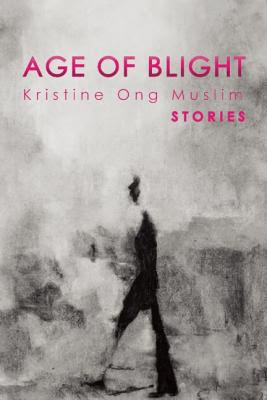
Introductory As the world burns away in political crises and ecological catastrophe, writers strain against meaninglessness, against the sense that their work is nothing more than a few grains of confectionary sugar tossed to a howling wind. What forms might fit our time, what stories might we tell against a future of no-one left to listen to stories? No other label for where we are and where we’re going as a world seems quite so accurate as the one Kristine Ong Muslim has used for her recent collection of stories, The Age of Blight . It is a book of glimpses, shards, and lost myths; it works like a nightmare recollected during the day before you know the nightmare will return and sleep cannot be kept at bay indefinitely. The Age of Blight and a thousand books like it will not forestall our own Age of Blight, but Muslim offers strategies for storytelling as the blasted era blightens. Her techniques for writing fiction are ones that make demands on the reader, but they...

Essence of Mannstyle: Blackhat

Image
Mannstyle No film director gets the sound of gunfire like Michael Mann . It's not just that he typically uses recordings of live fire; plenty of people do that. There's an alchemy he performs with his sound designers, a way of manipulating both the sound of the shots and the ambient sound to create a hyperreal effect. It's not the sound of gunfire. It's a sound that produces the effect of standing close to the sound of gunfire. Mann is celebrated and derided for his visual style, a style so damn stylish that any Mann film is likely to get at least a few reviews saying, "All style, no substance." I can't empathize with such a view; for me, style is the substance of art, and if any object has value beyond the functional, that value is directly produced by style. (Which is not to say that Mann's style is above criticism. Not at all. But to say that it is "only" style, and that substance is something else, something that can be separat...

"A Good Style Simply Doesn't Form"

Via the marvelous blog Reading Markson Reading , some words of wisdom from F. Scott Fitzgerald to his daughter: A good style simply doesn’t form unless you absorb half a dozen top-flight authors every year. Or rather it forms but instead of being a subconscious amalgam of all that you have admired, it is simply a reflection of the last writer you have read, a watered-down journalese. Fitzgerald's letter includes some recommended books, and blogger Tyler Malone follows up with a letter from David Markson to his own daughter offering a list of some favorite books. Great stuff.

Stylin'

Jeff VanderMeer has a good post up about style. You should read it. I, being endlessly excited by the topic, responded with a comment as long as the post itself. I didn't really mean to do that, and was embarrassed upon posting it to see just how much I'd written, but I was in a hurry and didn't have a chance to write concisely. But I wanted to offer a comment/question about translation -- specifically the fact that some great writing survives some really bad translation -- and see what folks did with it, if they did anything other than just groan and ignore me. Which might be the best response. Nonetheless, the post itself is worth considering... Meanwhile, I was tempted to write a long post here about the blazing idiocy of John Mullan's "12 of the Best New Novelists" thing at The Guardian , but other people are on it . Really, though, I know what you most want from me: cute wombats !

In Praise of Long Sentences

I've just begun reading Lucius Shepard's short novel Viator , and even though I'm only 35 pages in, it has already worked its way close to my heart by being constructed primarily (so far) of long, luxurious sentences, sentences that bloom with modifiers and clauses and details, sentences that are seldom awkward, because even though Shepard's prose has often been impressive since he first came to prominence in the early 1980s, his skill with language is now so polished and apparently effortless that sentences that feel remarkable on a first reading become even more astonishing when experienced a second or third time, and the cumulative effect of such stylistic high-wire acts being repeated page after page is to create a richness and density that many stories don't have at twice (or more) the length. Of course you'd like an example. Here, then, is the first paragraph of the book: Wilander had grown accustomed to his cabin aboard Viator . Small and unadorned...